How to Install a Car Lift: Step-by-Step Guide for Home Garages & Auto Shops
Installing a car lift is one of the most important upgrades you can make to a home garage or professional repair shop. A properly installed lift improves efficiency, saves space, and provides safe access to the underside of vehicles for maintenance and repairs.
However, installing an automotive lift requires more than simply assembling the equipment. Floor strength, ceiling height, electrical requirements, and proper anchoring all play a critical role in ensuring safe operation.
Whether you're planning to install a 2-post car lift or a 4-post car lift, this guide walks you through the preparation, installation process, safety checks, and common mistakes to avoid.
📘 Related Resources:
• How to Choose the Right Car Lift Buyer's Guide
• Browse Our Complete Car Lift Collection
📑 Table of Contents
● Can You Install a Car Lift Yourself?
● Garage Requirements Before Installation
● Concrete Requirements
● Ceiling Height Requirements
● Electrical Requirements
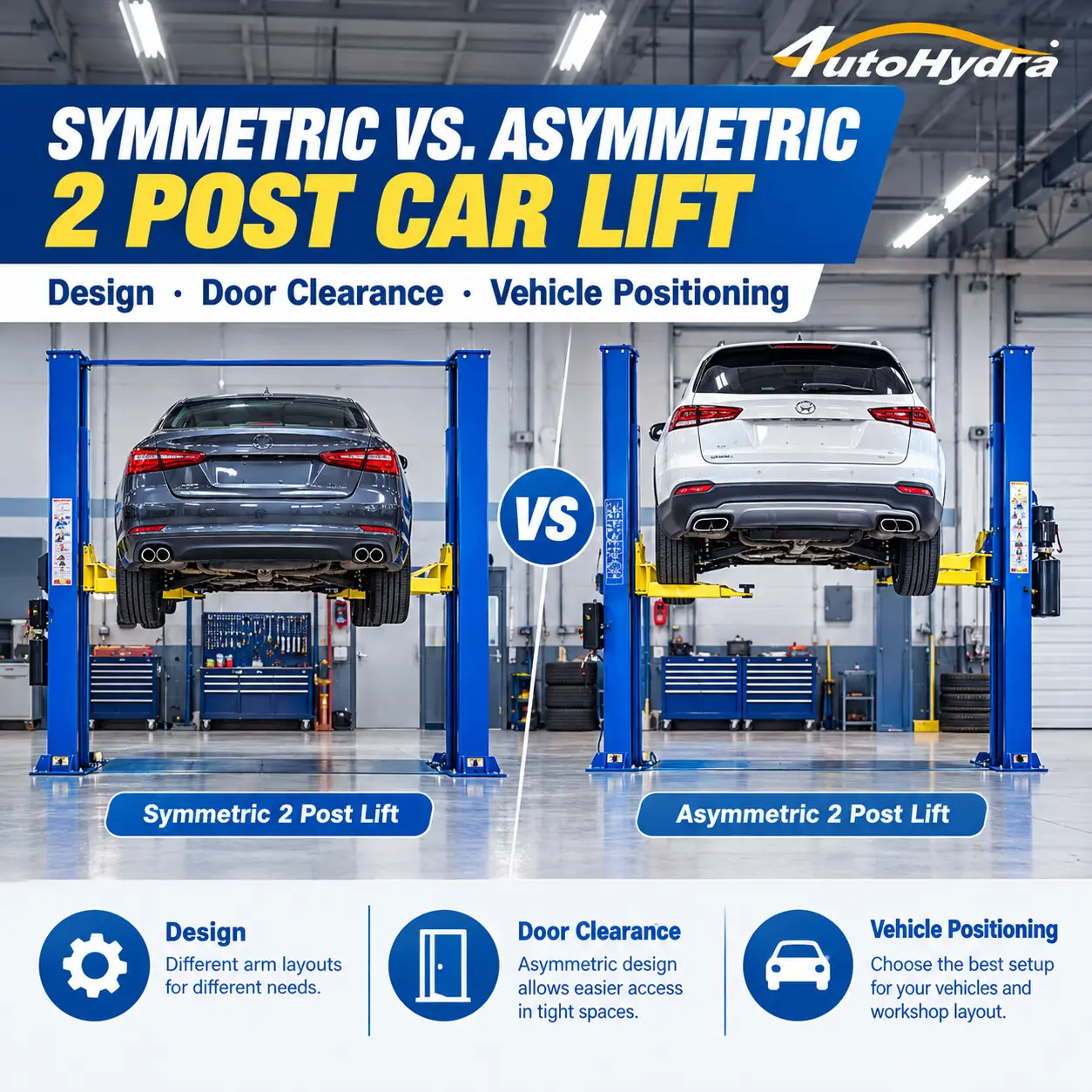
● Installing a 2-Post Car Lift
● Installing a 4-Post Car Lift
● Final Safety Inspection Checklist
● Common Installation Mistakes
● Frequently Asked Questions
Can You Install a Car Lift Yourself?
Many experienced DIY enthusiasts can install a car lift, but it's important to understand that proper installation directly affects the lift's safety and performance.
Before beginning the installation, carefully review the manufacturer's instructions and verify that your garage meets all structural and electrical requirements.
⚠️ For commercial repair shops or first-time installers, professional installation is often the safest option. Proper installation reduces many common lift problems. If problems occur, see our Car Lift Troubleshooting Guide.
Garage Requirements Before Installation
Before unpacking your lift, verify that your garage has adequate space.
Minimum requirements include:
● Sufficient ceiling height
● Level concrete floor
● Adequate bay width
● Proper lighting
● Accessible electrical supply
● Safe working clearance around the lift
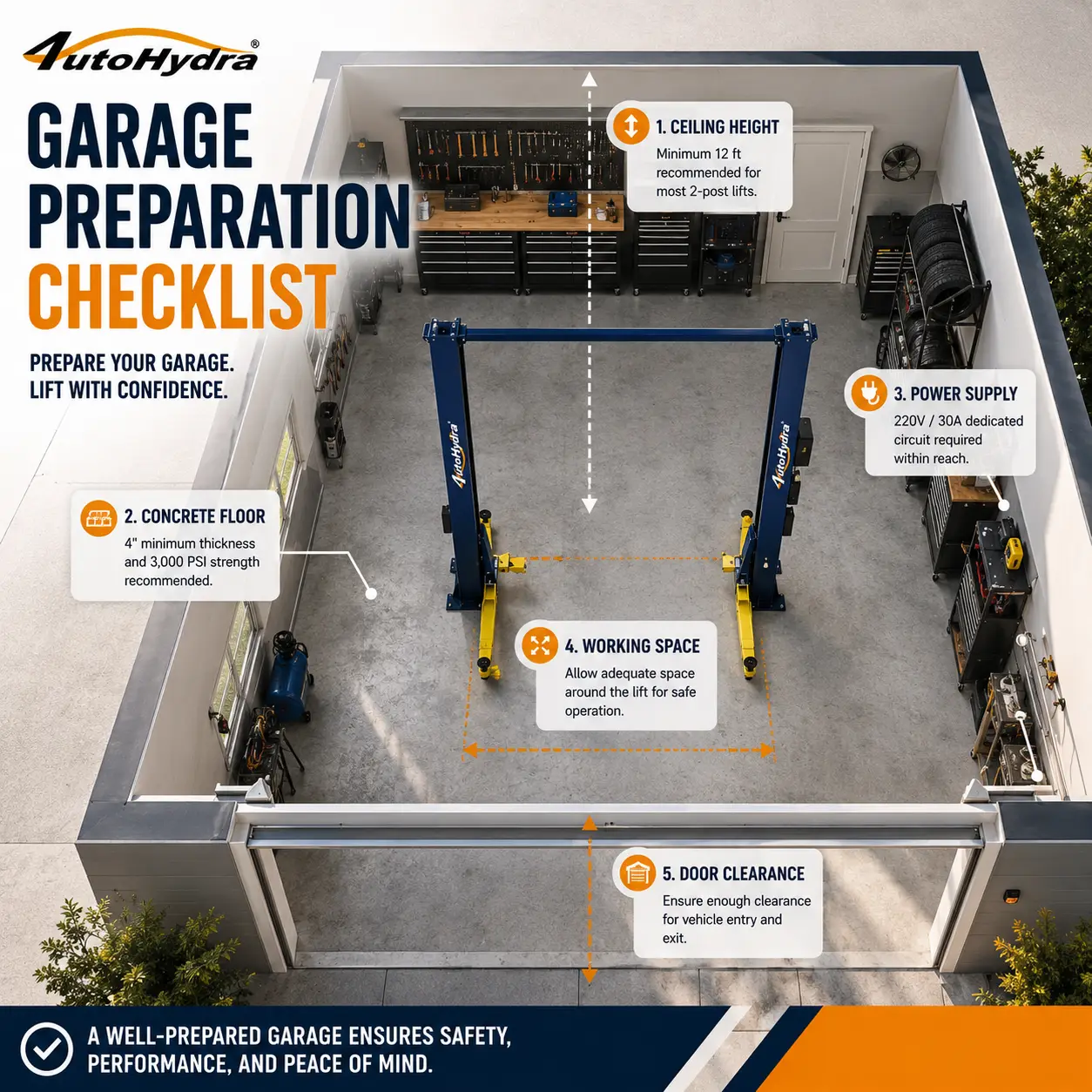
💡 Planning ahead helps avoid costly modifications later.
Concrete Requirements
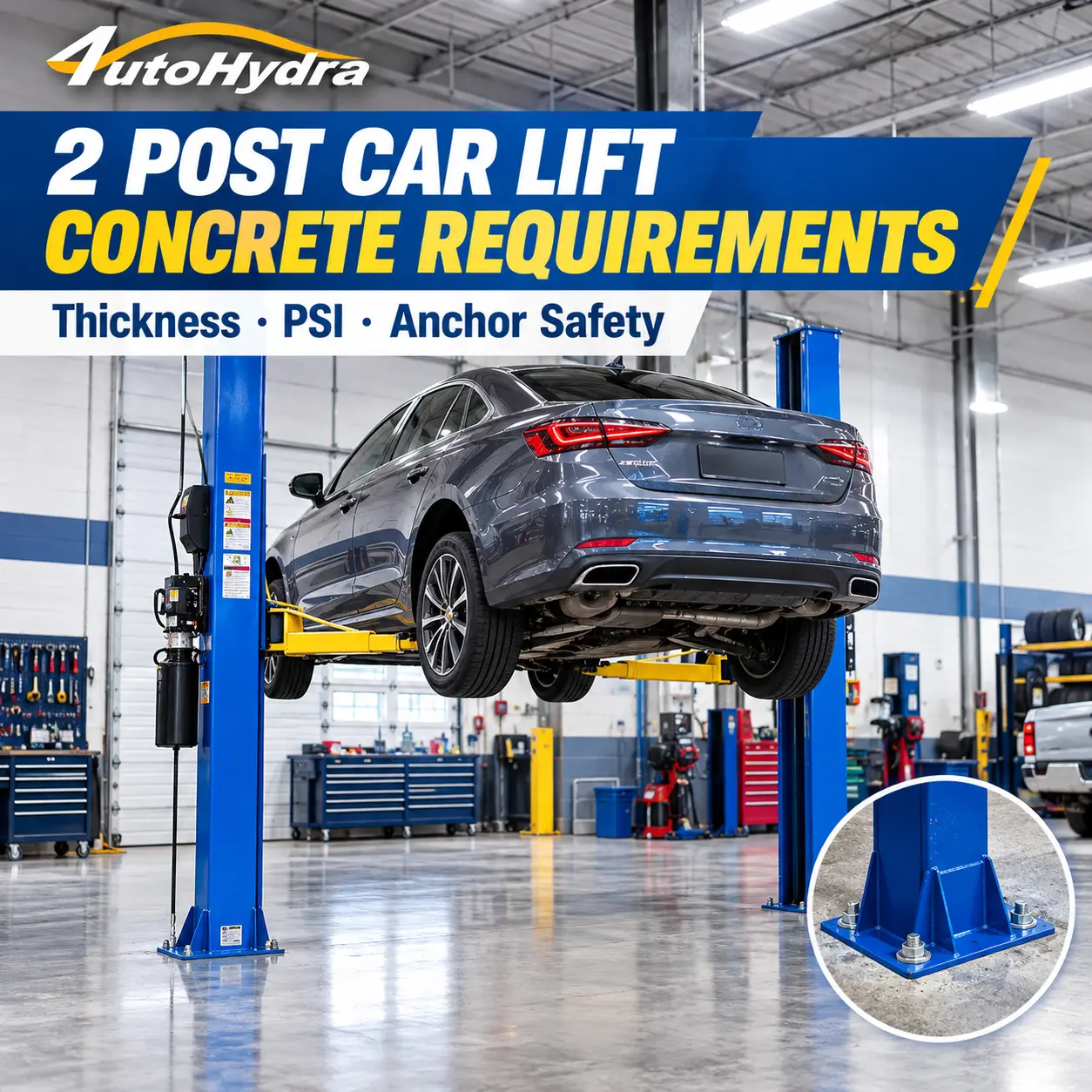
One of the most overlooked installation factors is the concrete floor. The lift's anchor bolts rely entirely on the strength of the concrete slab.
Before installation, check:
● Concrete thickness
● Concrete strength
● Floor levelness
● Existing cracks or damage
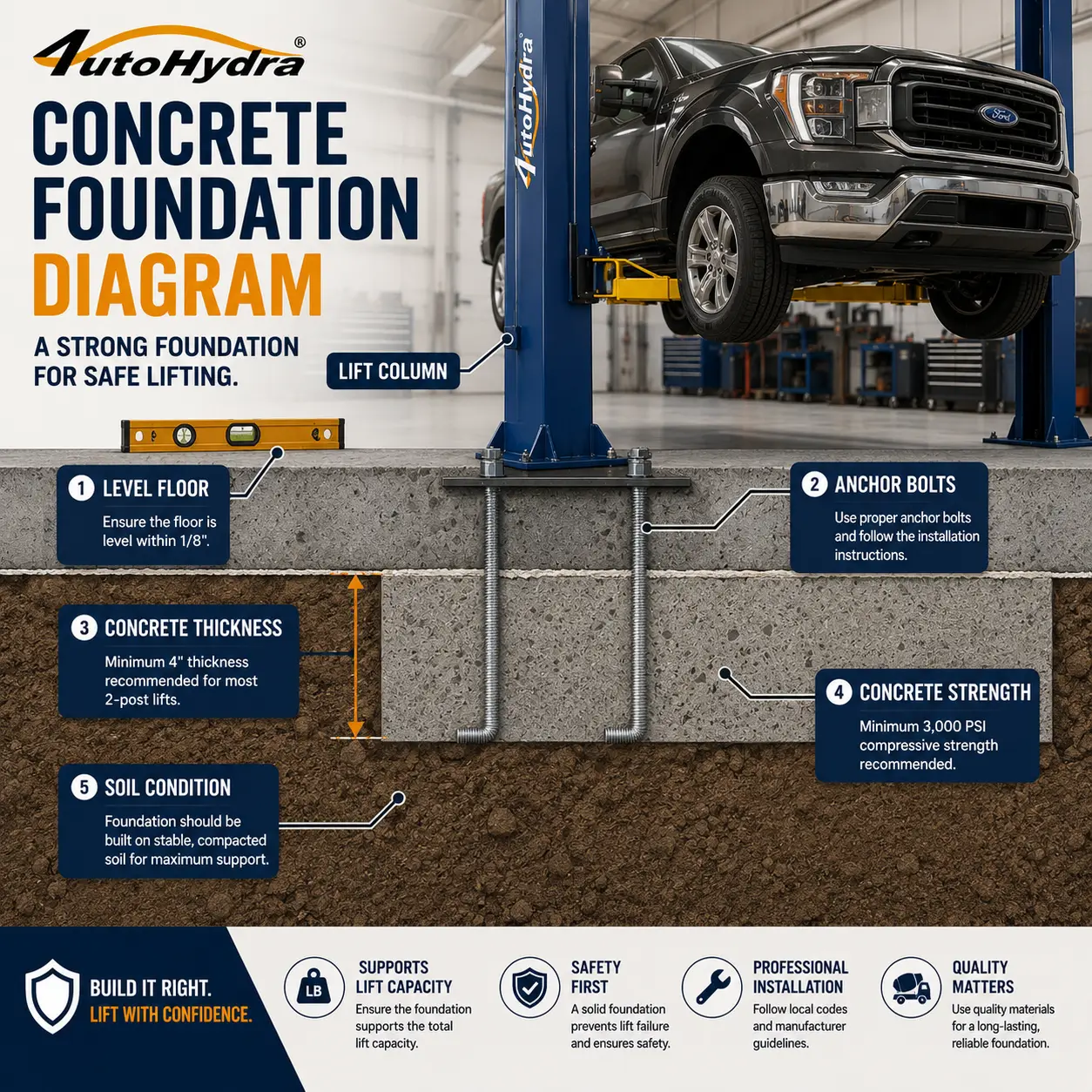
⚠️ A weak or uneven floor may compromise the lift's stability and safety.
💡 Tip: Always follow the concrete specifications provided for your specific lift model. Requirements can vary by capacity and design.
Ceiling Height Requirements
Not every garage is suitable for every lift. The required ceiling height depends on several factors:
● Lift type
● Maximum lifting height
● Vehicle height
● Vehicle roof accessories
● Overhead door tracks
● Lighting fixtures
📏 Always measure your available height before ordering a lift.
Electrical Requirements
Most professional car lifts require a dedicated electrical circuit. Before installation, verify:
● Voltage requirements
● Breaker size
● Outlet location
● Wiring capacity
⚡ Consult a licensed electrician if modifications are needed.
Installing a 2-Post Car Lift
Installing a 2-post lift typically involves the following steps:
- Mark the Layout – Position both columns according to the manufacturer's dimensions. Check all measurements twice before drilling.
- Drill Anchor Holes – Use the specified drill bit size and drill to the required depth. Remove all concrete dust before installing anchor bolts.
- Install the Columns – Raise both columns into position. Verify they are perfectly vertical before tightening anchors.
- Install the Hydraulic System – Connect hydraulic hoses according to the installation manual. Check all fittings for leaks.
- Connect the Power Unit – Install the motor and electrical components. Verify correct rotation before operating.
- Test the Lift – Operate the lift without a vehicle. Check:
● Lock engagement
● Hydraulic operation
● Cable tension
● Lift synchronization
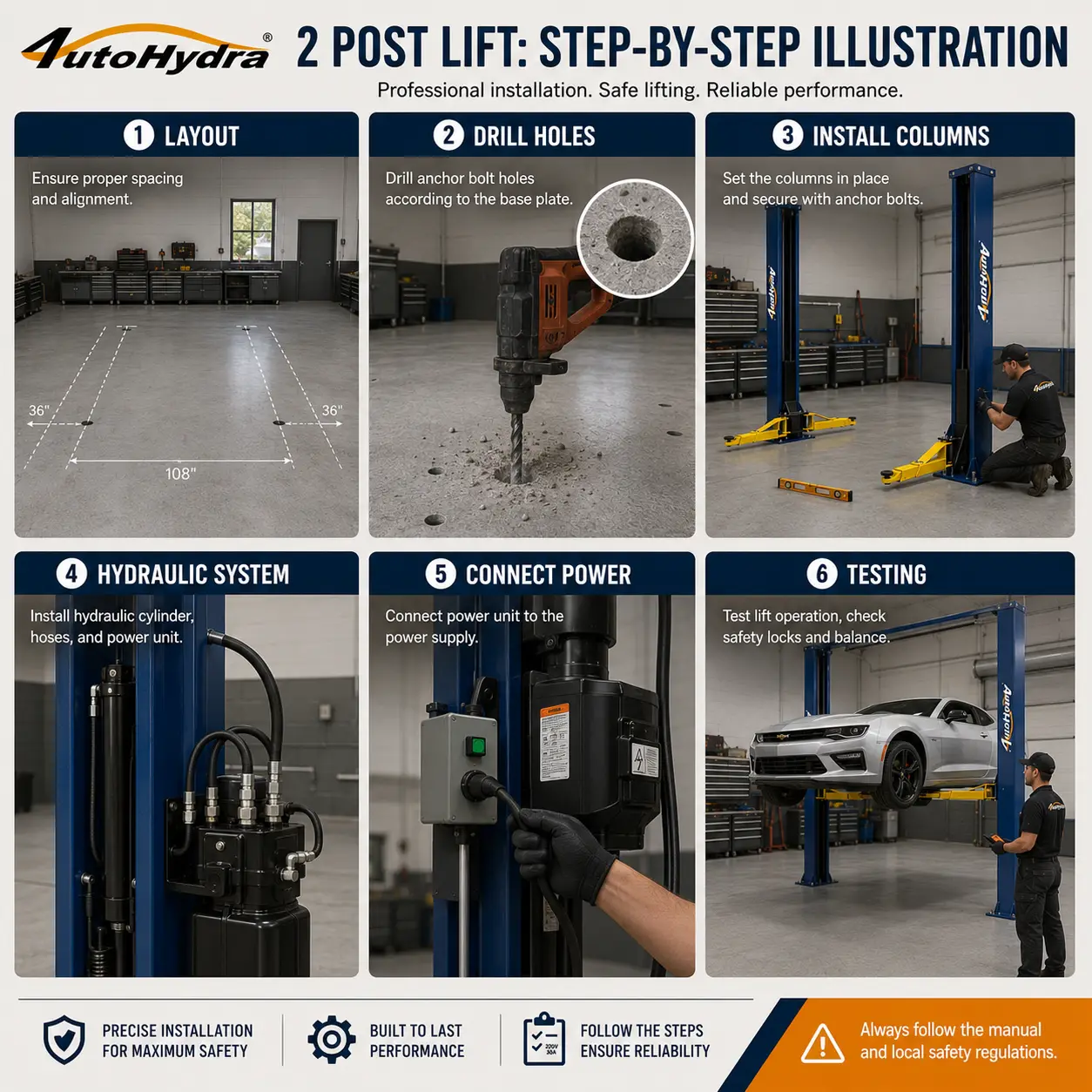
✅ Only after passing all tests should the lift be used with a vehicle.
Installing a 4-Post Car Lift
A 4-post lift follows a slightly different installation process. Main steps include:
● Assemble the columns
● Install crossbeams
● Mount runways
● Install cables
● Adjust cable tension
● Install safety locks
● Perform operational testing
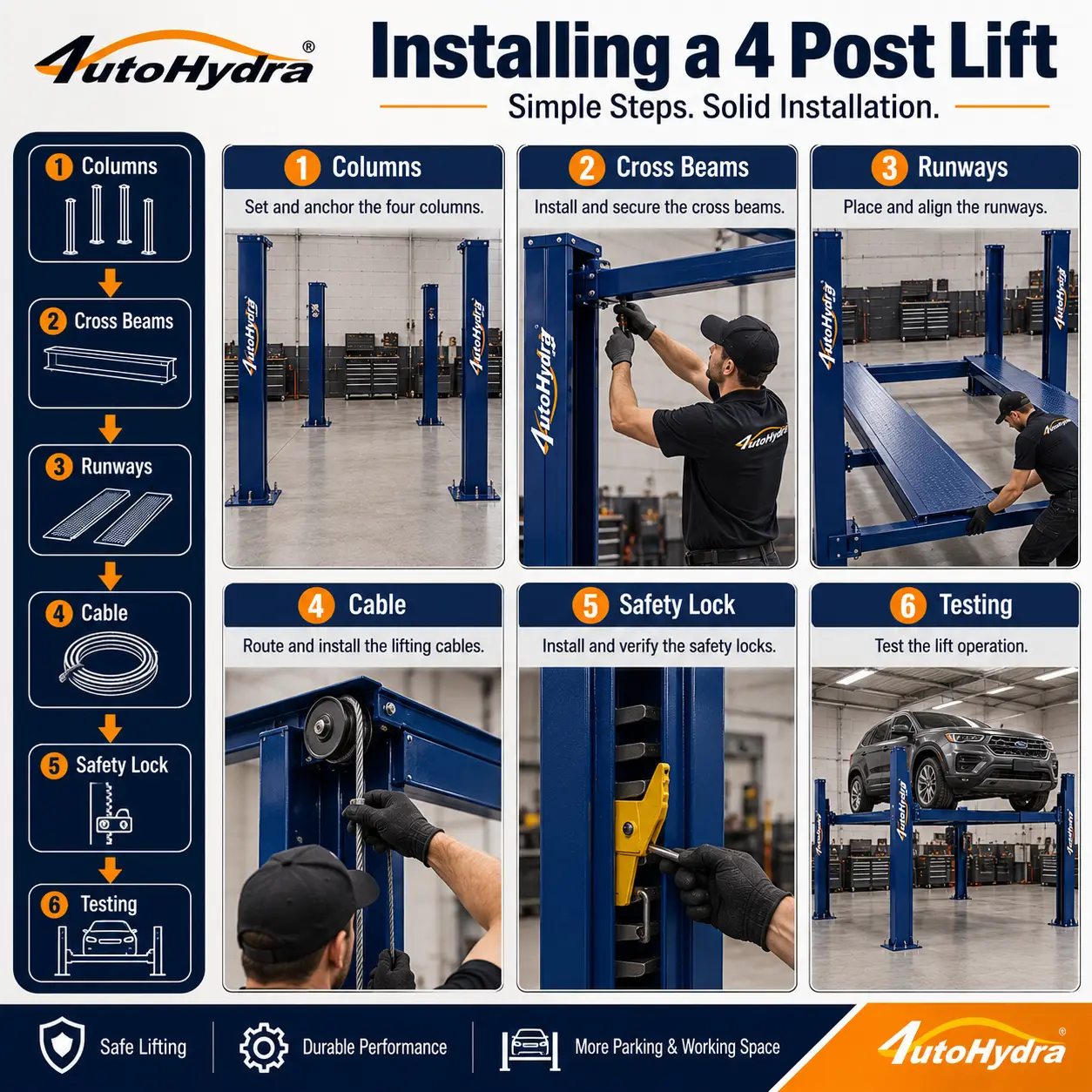
🚗 Because vehicles drive directly onto the runways, proper leveling is especially important.
Final Safety Inspection Checklist
Before placing a vehicle on the lift, inspect the following:
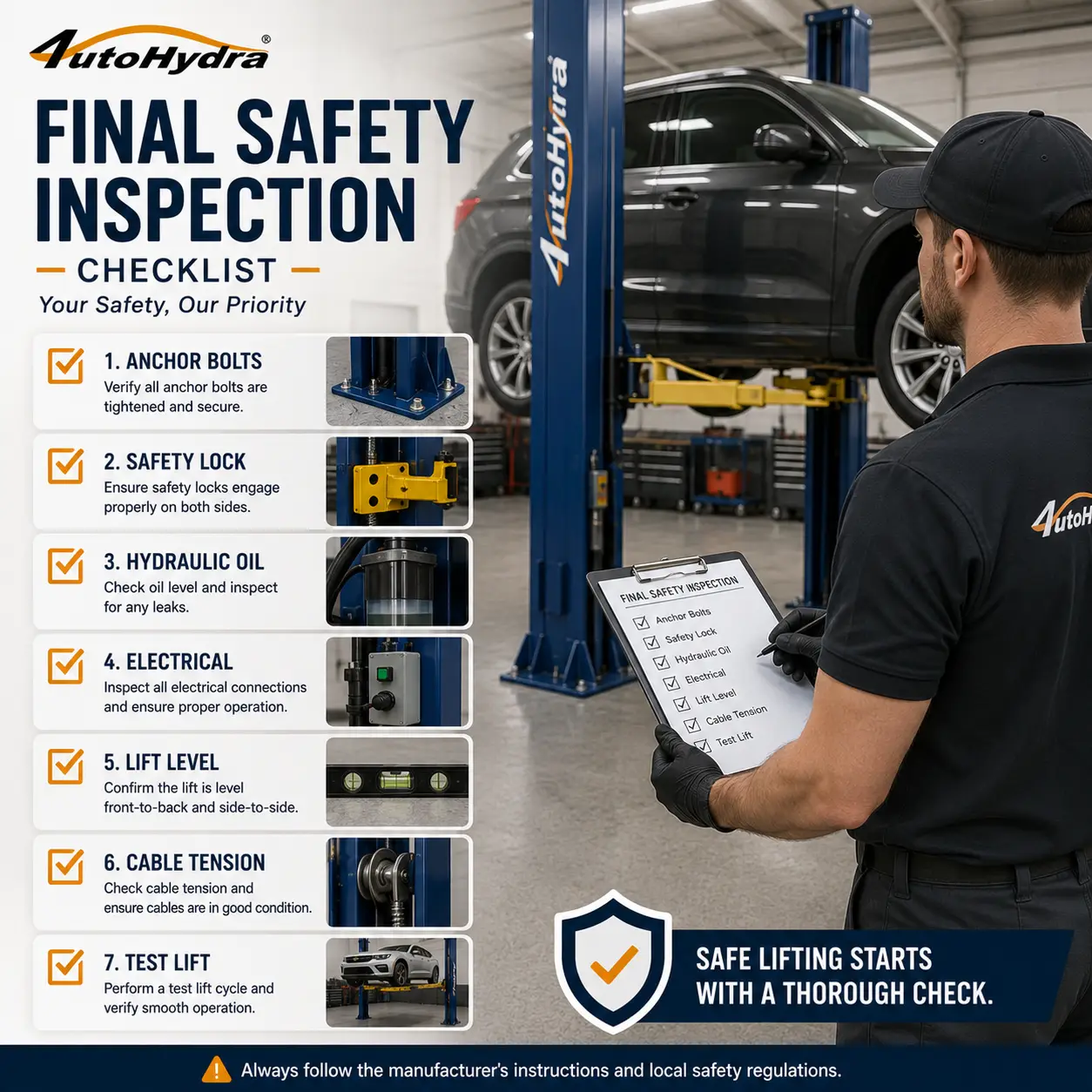
✅ This checklist helps ensure the lift is ready for safe operation.
Common Installation Mistakes
Many installation problems can be prevented by avoiding these common mistakes:
❌ Installing on thin concrete: Insufficient concrete thickness can reduce anchor strength.
❌ Skipping floor leveling: Even slight floor unevenness can affect lift alignment.
❌ Incorrect anchor bolt torque: Always tighten anchor bolts to the manufacturer's specifications.
❌ Ignoring electrical requirements: Undersized wiring may cause motor performance issues.
❌ Failing to test before use: Always perform a complete operational test before lifting a vehicle.
Related Buying Guides
Before installing your lift, you may also find these resources helpful:
Regular maintenance is essential after installation. Read our Car Lift Maintenance Checklist.
Frequently Asked Questions
Can I install a car lift by myself?
Yes, experienced DIY users may install certain models, but professional installation is recommended if you're unfamiliar with structural anchoring or electrical work.
How thick should the concrete floor be?
The required thickness depends on the lift model and capacity. Always follow the manufacturer's installation specifications.
Do I need a dedicated electrical circuit?
Most professional lifts require a dedicated circuit to ensure safe and reliable operation.
How long does installation take?
For experienced installers, installation typically takes several hours. First-time installations may require additional time for measuring, anchoring, and testing.
Can I install a lift in a residential garage?
Yes, provided the garage has sufficient ceiling height, a suitable concrete floor, and adequate electrical supply.
Final Thoughts
Proper installation is just as important as choosing the right car lift. Taking time to prepare your garage, verify structural requirements, and carefully follow installation procedures helps ensure years of safe, reliable operation.
Whether you're upgrading a professional workshop or building your dream home garage, AUTO HYDRA offers a wide range of 2-post and 4-post car lifts designed for durability, performance, and long-term reliability.
Browse our complete Car Lift Collection to compare models and find the right lifting solution for your needs.
Ready to Install? Need Expert Advice?
Get a free installation consultation from AUTO HYDRA's lift specialists — we'll help you assess your garage, choose the right lift, and avoid costly mistakes.
📞 Contact Installation Support
✔️ Same‑day quotes · ✔️ Expert guidance · ✔️ Fast shipping from US warehouses
Recommended News
View all