Car Lift Capacity Guide: How to Choose the Right Lift Capacity for Your Vehicle
Selecting the correct car lift capacity is one of the most important decisions when purchasing an automotive lift. While many buyers focus on lift style or price, choosing the wrong weight capacity can compromise safety, limit your service capabilities, and reduce equipment lifespan.
Whether you're equipping a professional repair shop or upgrading a home garage, understanding lift capacity ensures you choose equipment that meets both your current and future needs.
📘 Related Guides:
• 2 Post vs 4 Post Car Lift Guide
• Complete Car Lift Buyer's Guide
• Browse All Car Lifts
Why Car Lift Capacity Matters
Every automotive lift is designed to safely support a maximum vehicle weight. Choosing a lift with insufficient capacity may result in:
- Reduced operational safety
- Excessive wear on hydraulic components
- Increased maintenance costs
- Limited compatibility with larger vehicles
- Potential damage to the lift
⚠️ Important: While buying an oversized lift isn't always necessary, selecting the right capacity provides flexibility for future vehicle upgrades and changing business needs.
Understanding Rated Lift Capacity
A lift's rated capacity represents the maximum safe operating weight under ideal conditions. Always verify your vehicle's Gross Vehicle Weight Rating (GVWR) before selecting a lift.
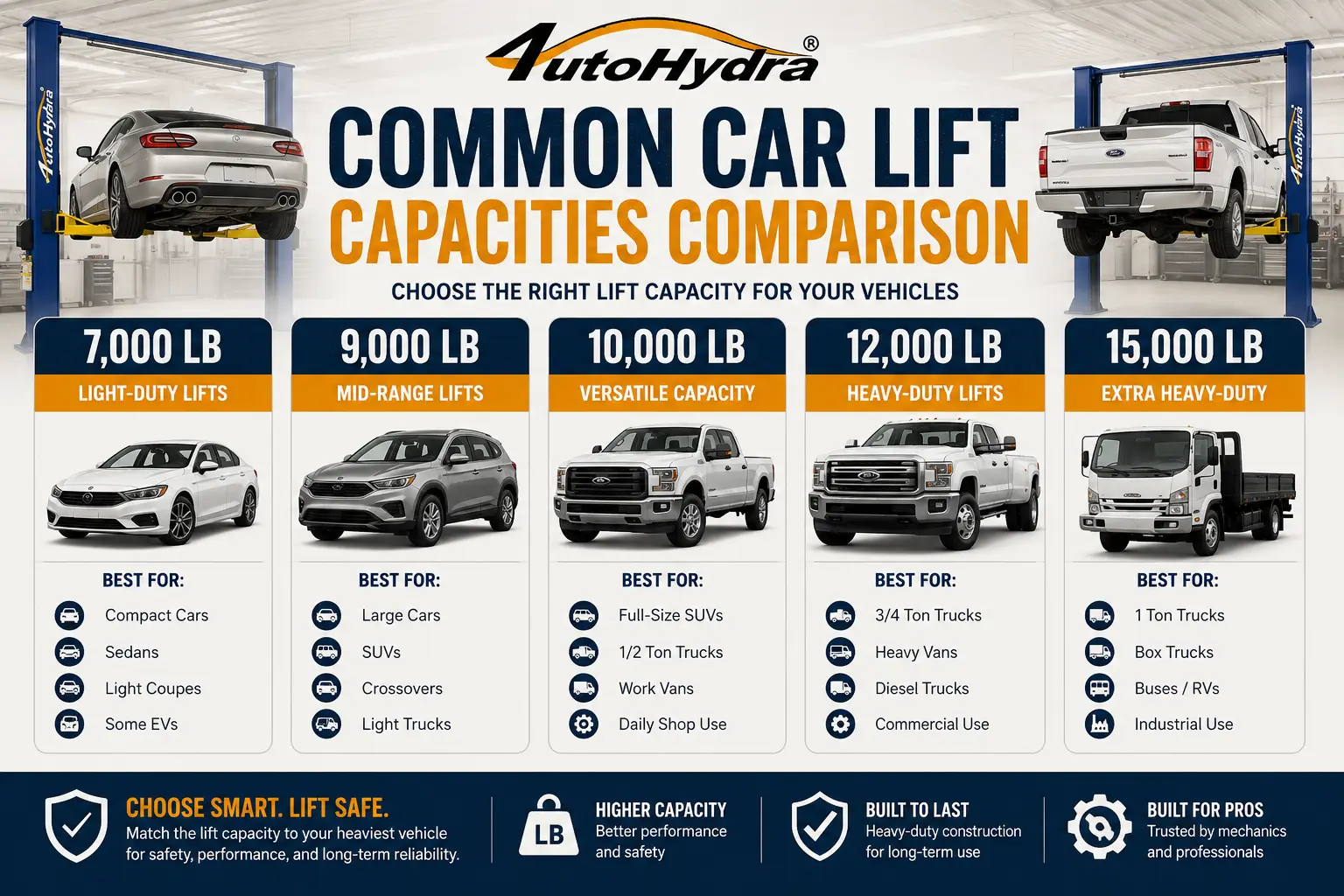
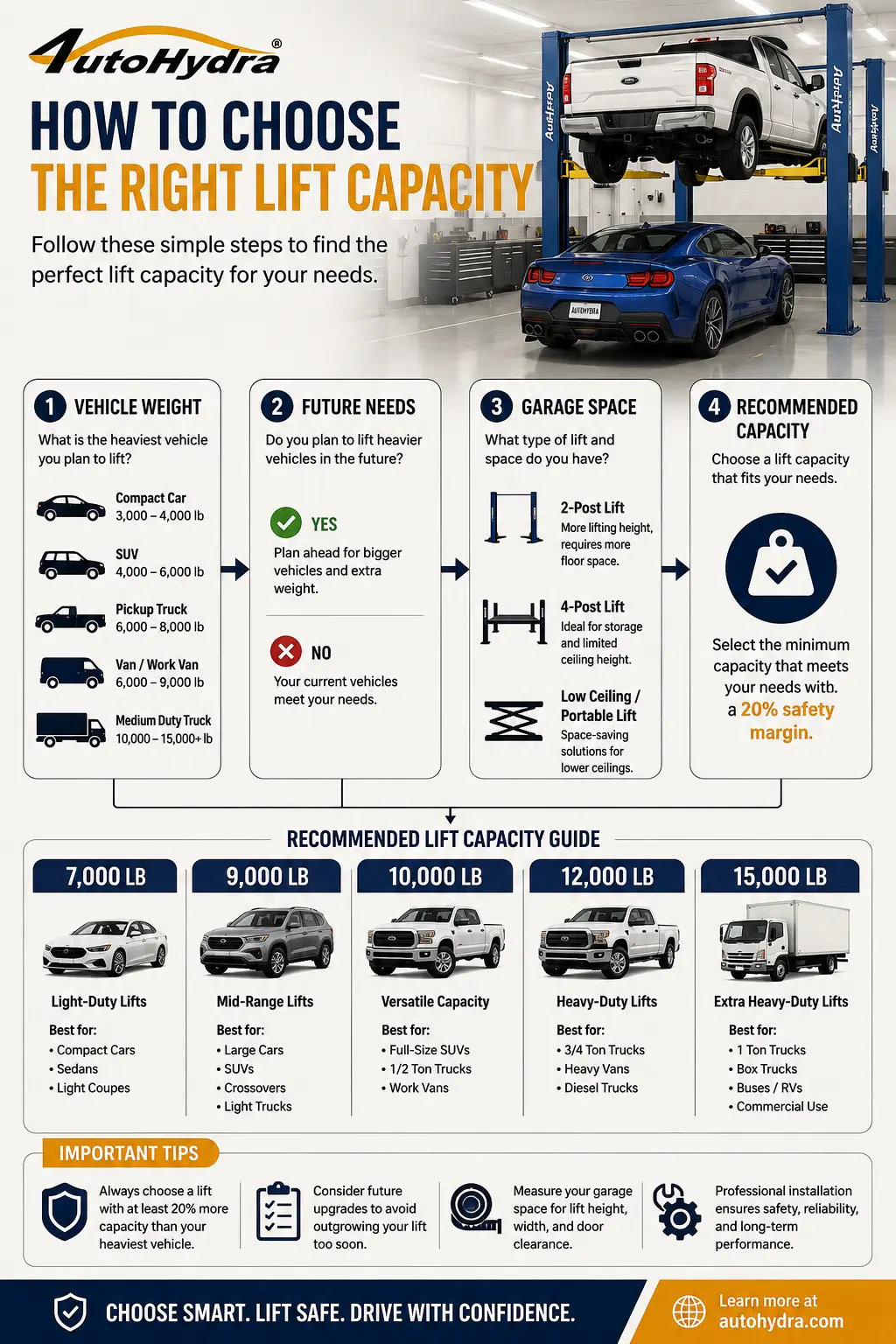
Which Lift Capacity Is Right for Your Garage?
7,000 lb Car Lift
● Ideal for: Compact cars, small sedans, sports cars
● Advantages: Lower cost, smaller footprint, perfect for hobby garages
● Limitations: Limited compatibility with larger SUVs and trucks
9,000 lb Car Lift (🛒click and buy)
One of the most popular capacities worldwide.
● Suitable for: Most passenger vehicles, crossovers, mid-size SUVs, light pickup trucks
● Why it's popular: Excellent balance between versatility and affordability — a common choice for independent repair shops.
10,000 lb Car Lift (🛒click and buy)
● Recommended for: Full-size SUVs, half-ton pickup trucks, commercial work vehicles
● Pro tip: Many professional workshops prefer this capacity because it covers a wider range of vehicles without significantly increasing operating costs.
12,000 lb Car Lift (🛒click and buy)
● Designed for: Heavy-duty pickups, commercial vans, larger fleet vehicles
● Investment value: Although the initial investment is higher, this capacity offers excellent flexibility for commercial service centers.
Recommended Capacity by Vehicle Type
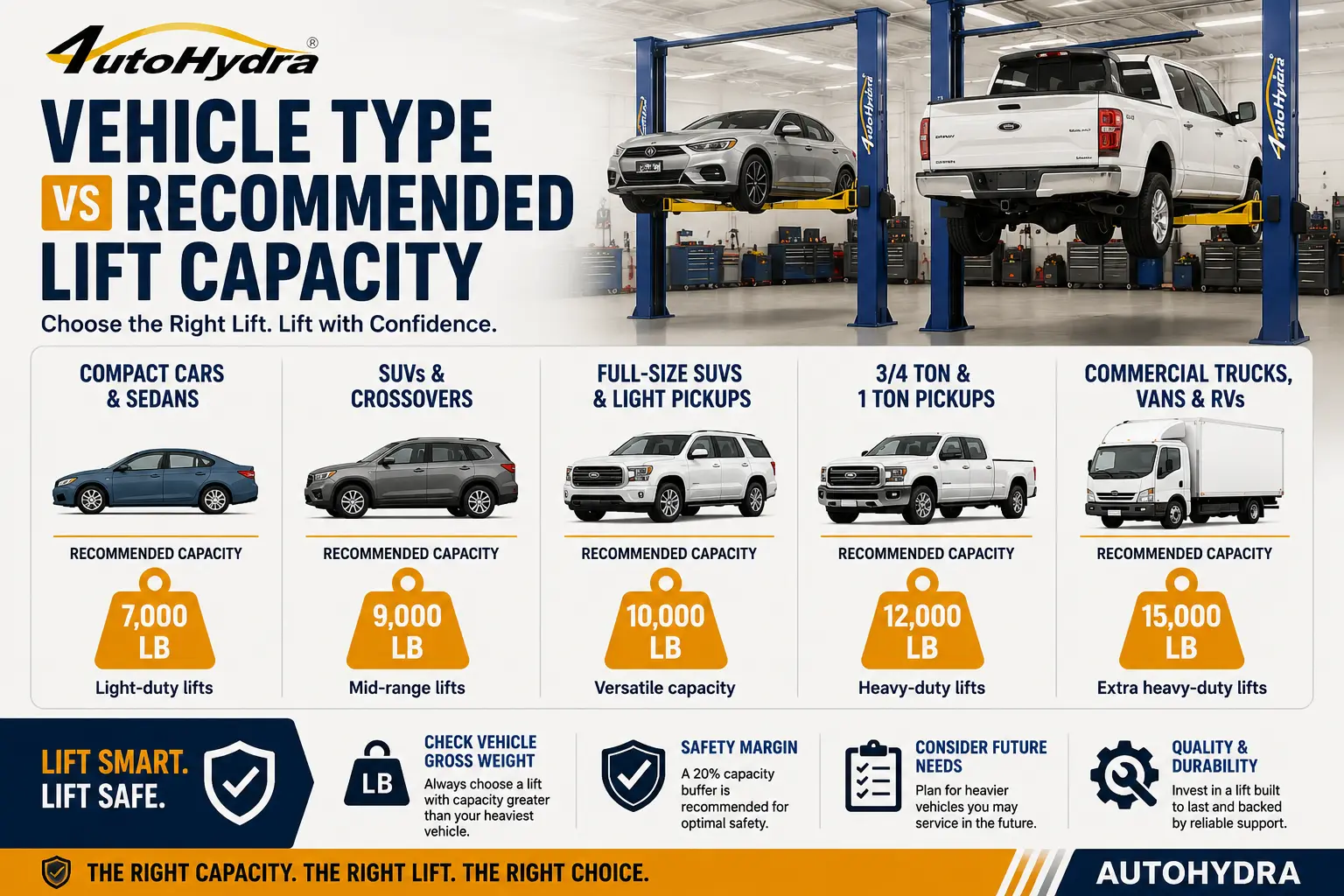
✅ Smart strategy: Choosing slightly above your heaviest expected vehicle is generally recommended for long-term flexibility.
Common Buying Mistakes
Many buyers make avoidable mistakes when selecting lift capacity.
❌ Buying Only for Today's Vehicle
Your current vehicle may weigh significantly less than future vehicles you'll service.
❌ Ignoring Vehicle Modifications
Lift kits, larger tires, aftermarket accessories, and cargo all increase total vehicle weight.
❌ Choosing Based Only on Price
A lower-capacity lift may save money initially but could require replacement as your business grows.
Capacity Is Only One Part of the Equation
A higher capacity doesn't automatically mean a lift is the best choice. You should also consider:
● Garage ceiling height
● Available floor space
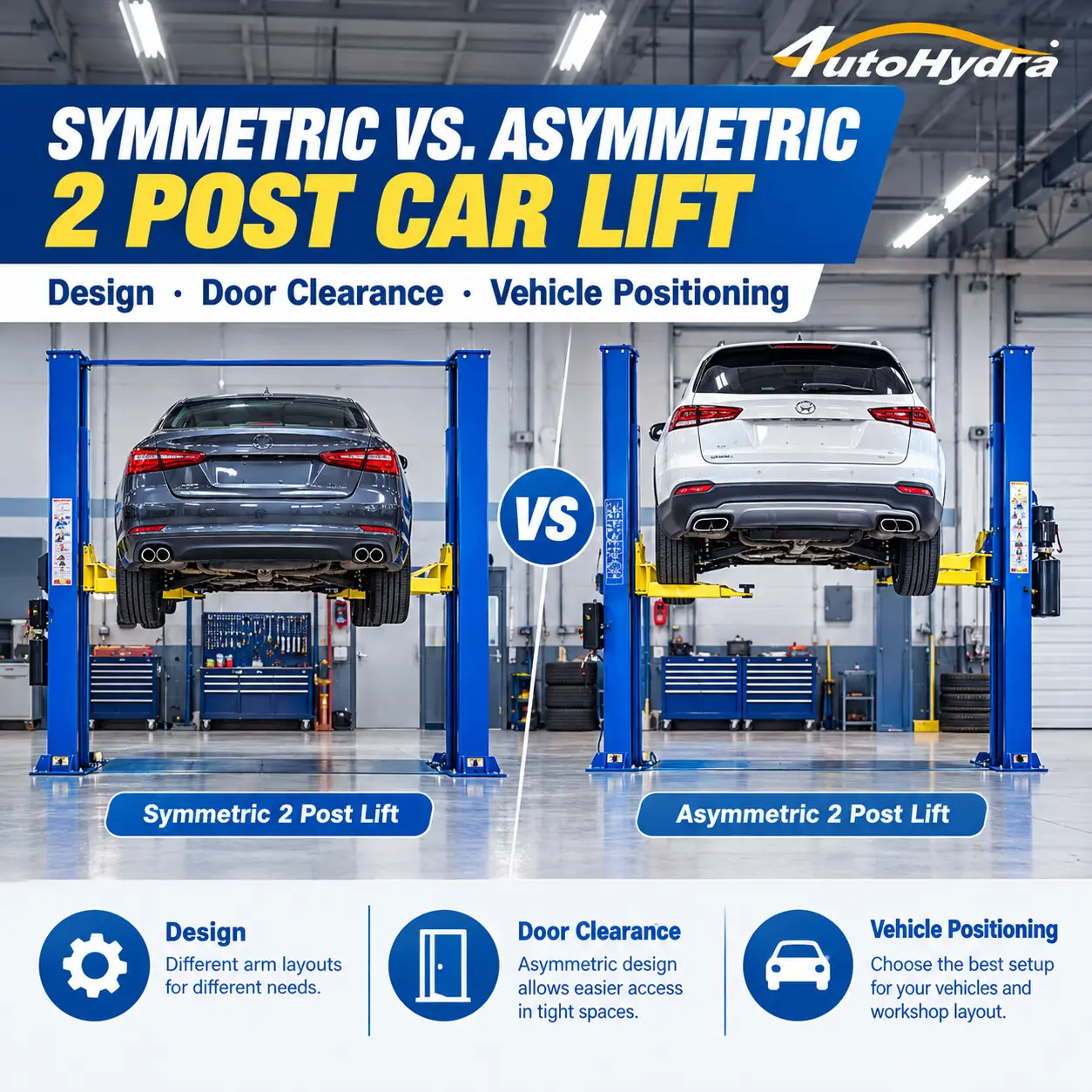
● Lift type (2-post vs 4-post vs scissor, etc.)
● Vehicle wheelbase
● Installation requirements
Need help selecting the right lift style?
Read our complete How to Choose the Right Car Lift Buyer's Guide.
Safety Tips When Using Any Car Lift
Regardless of capacity, always follow these best practices:
● Never exceed the rated lifting capacity.
● Position the vehicle according to the manufacturer's lifting points.
● Inspect hydraulic systems and safety locks regularly.
● Perform routine maintenance.
● Train operators before use.
● Never work beneath an improperly supported vehicle.
🔧 Remember: Safe operation extends equipment life and protects both technicians and vehicles.
Frequently Asked Questions
Is a 9,000 lb lift enough for most vehicles?
Yes. A 9,000 lb lift is suitable for most passenger cars, crossovers, SUVs, and many light-duty pickup trucks.
Should I buy a larger lift than I currently need?
If you expect to service larger vehicles in the future, purchasing a slightly higher-capacity lift can provide greater flexibility and reduce the need for future upgrades.
Can a 10,000 lb lift handle pickup trucks?
Most half-ton pickup trucks fall comfortably within a 10,000 lb lift's operating range. Always verify the vehicle's GVWR before lifting.
Is lift capacity the same as lifting strength?
Not exactly. Capacity refers to the maximum safe working load established by the manufacturer, assuming proper installation and operation.
Does a higher-capacity lift require more maintenance?
Routine maintenance requirements are generally similar, but heavier-duty lifts may have larger hydraulic systems and components that require periodic inspection.
Still Not Sure Which Capacity Fits Your Shop?
Get a free, no-obligation sizing consultation from AUTO HYDRA's lift experts — we'll help you match capacity, lift type, and budget.
✔️ Same‑day quotes · ✔️ Expert advice · ✔️ Fast shipping from US warehouses
Recommended News
View all