Car Lift Maintenance Checklist: Safety & Service Guide
A car lift is one of the most valuable pieces of equipment in any automotive repair shop or home garage. However, like any mechanical system, a vehicle lift requires regular maintenance to ensure safe operation, reliable performance, and a longer service life.
Proper maintenance helps prevent unexpected downtime, reduces repair costs, and protects both technicians and vehicles.
Whether you operate a 2 post car lift, 4 post car lift, or another type of automotive lifting equipment, following a consistent inspection routine is essential.
📘 Related Resources:
• How to Install a Car Lift: Step-by-Step Guide
• Car Lift Buyer's Guide
Why Car Lift Maintenance Matters
Regular maintenance is not only about extending equipment lifespan. It is also an important part of workplace safety.
If problems occur, see our Car Lift Troubleshooting Guide.
✅ A properly maintained car lift helps:
● Improve lifting stability
● Reduce hydraulic system failures
● Prevent unexpected downtime
● Extend component lifespan
● Maintain safe vehicle positioning
⚠️ Neglecting maintenance can lead to:
● Hydraulic leaks
● Uneven lifting
● Excessive noise
● Safety lock failures
● Premature component wear
Car Lift Maintenance Schedule Overview
A simple maintenance schedule helps keep your equipment operating correctly.
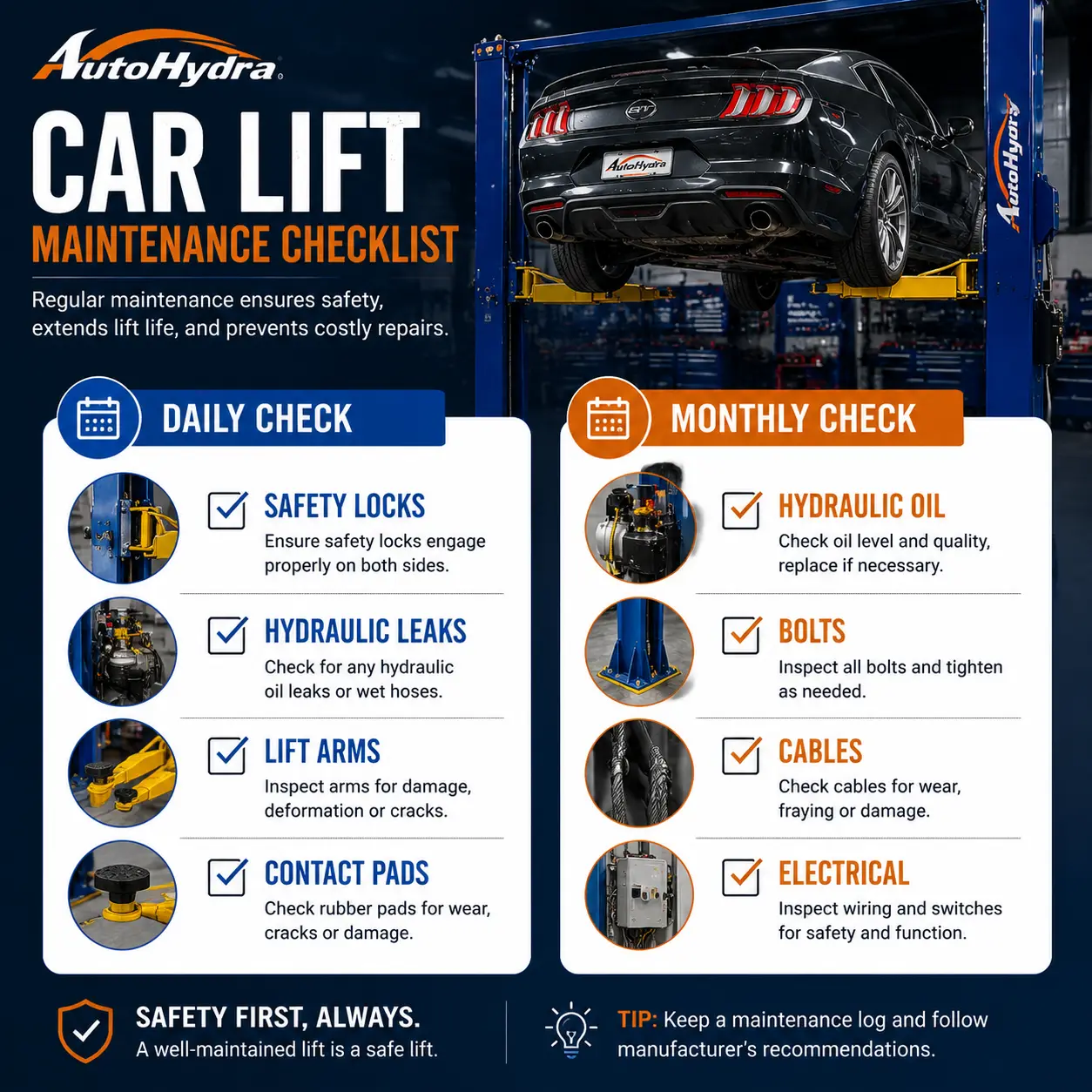
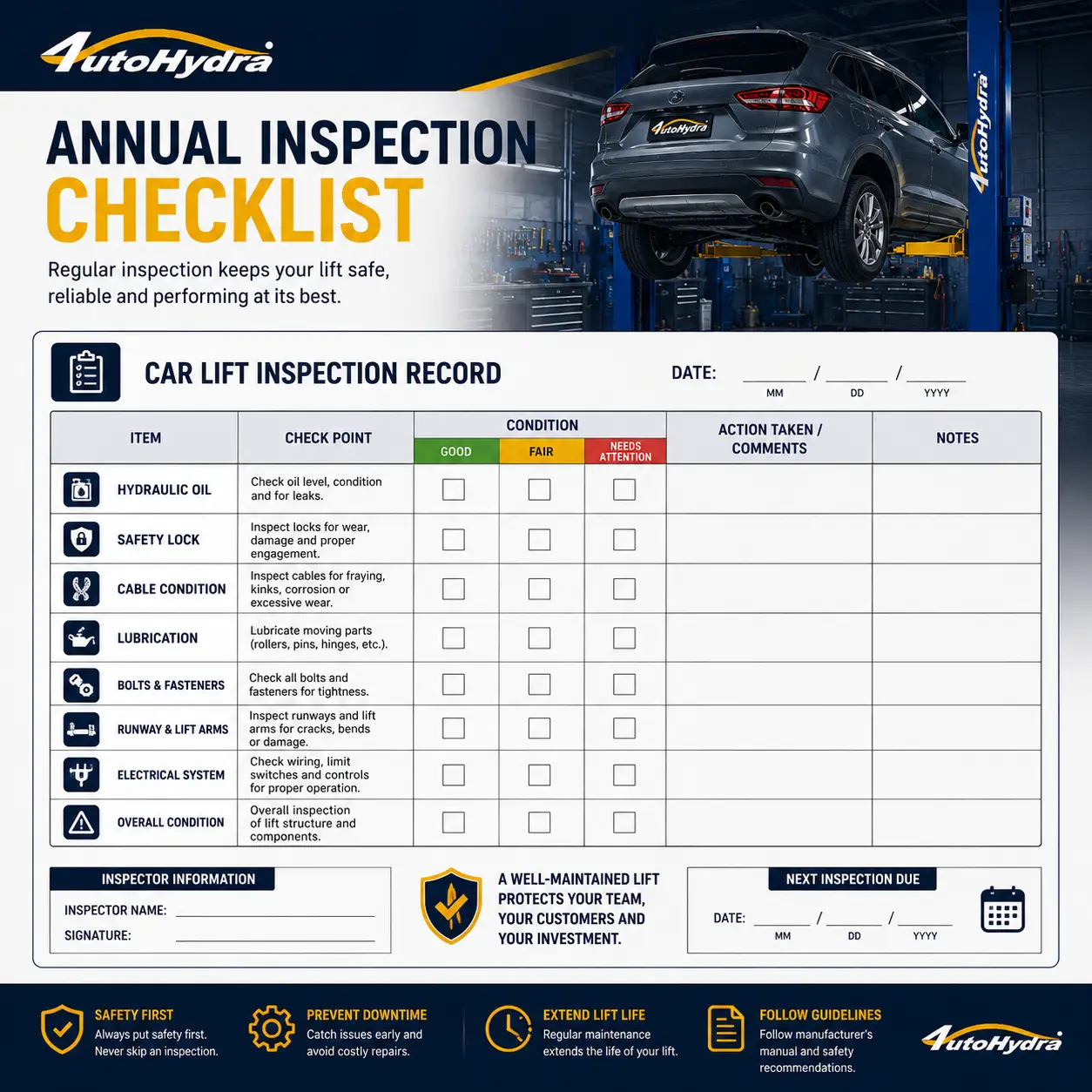
Daily Car Lift Inspection Checklist
Before using a car lift every day, operators should perform a quick visual inspection.
🔒 Check Safety Locks
Safety locks are one of the most important protection systems. Inspect:
● Lock engagement
● Locking position
● Unusual movement
● Damaged components
⚠️ Never operate a lift if safety locks are not functioning properly.
💧 Inspect Hydraulic System
Check for:
● Hydraulic oil leaks
● Damaged hoses
● Loose fittings
● Unusual hydraulic noise
💡 Small leaks can become larger failures if ignored.
🛠️ Check Lift Arms and Contact Pads
For 2 post lifts, inspect:
● Lift arm condition
● Arm restraints
● Rubber pads
● Contact points
Damaged pads can affect vehicle stability.
🧹 Check Operating Area
Make sure:
● Floor area is clean
● No obstacles block operation
● Vehicle positioning area is clear
✅ A clean working environment improves safety.
Weekly Car Lift Maintenance Tasks
Weekly maintenance should focus on moving parts and frequently used components.
🔧 Lubricate Moving Components
Proper lubrication reduces friction and wear. Common lubrication points include:
● Hinges
● Rollers
● Bushings
● Sliding surfaces
💡 Always use lubricants recommended by the manufacturer.
🔩 Check Bolts and Fasteners
Vibration during operation can gradually loosen hardware. Inspect:
● Anchor bolts
● Column bolts
● Mounting hardware
Tighten according to manufacturer specifications.
Monthly Car Lift Maintenance Checklist
Monthly inspections require a more detailed review.
| Component | Inspection |
|---|---|
| Hydraulic oil | Check level and condition |
| Hydraulic hoses | Inspect cracks and leaks |
| Cables/chains | Check wear and tension |
| Electrical system | Inspect connections |
| Safety locks | Confirm operation |
Hydraulic System Maintenance
The hydraulic system is the heart of many automotive lifts.
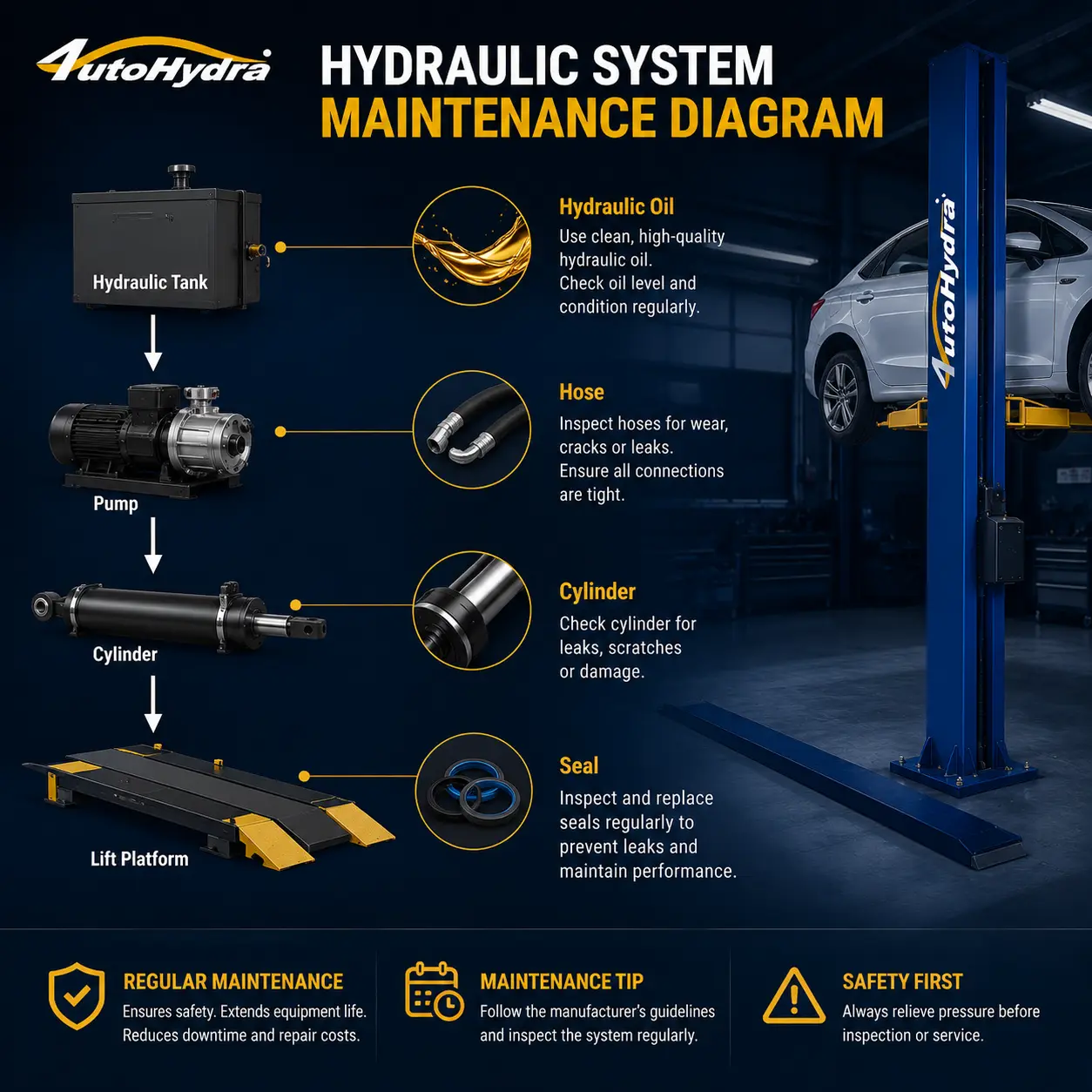
Check Hydraulic Fluid
Low or contaminated hydraulic oil can affect lifting performance. Inspect:
● Oil level
● Oil condition
● Signs of contamination
Inspect Hydraulic Lines
Look for:
● Cracks
● Leaks
● Damaged fittings
● Loose connections
⚠️ Replace damaged hydraulic components immediately.
2 Post Lift Maintenance Tips
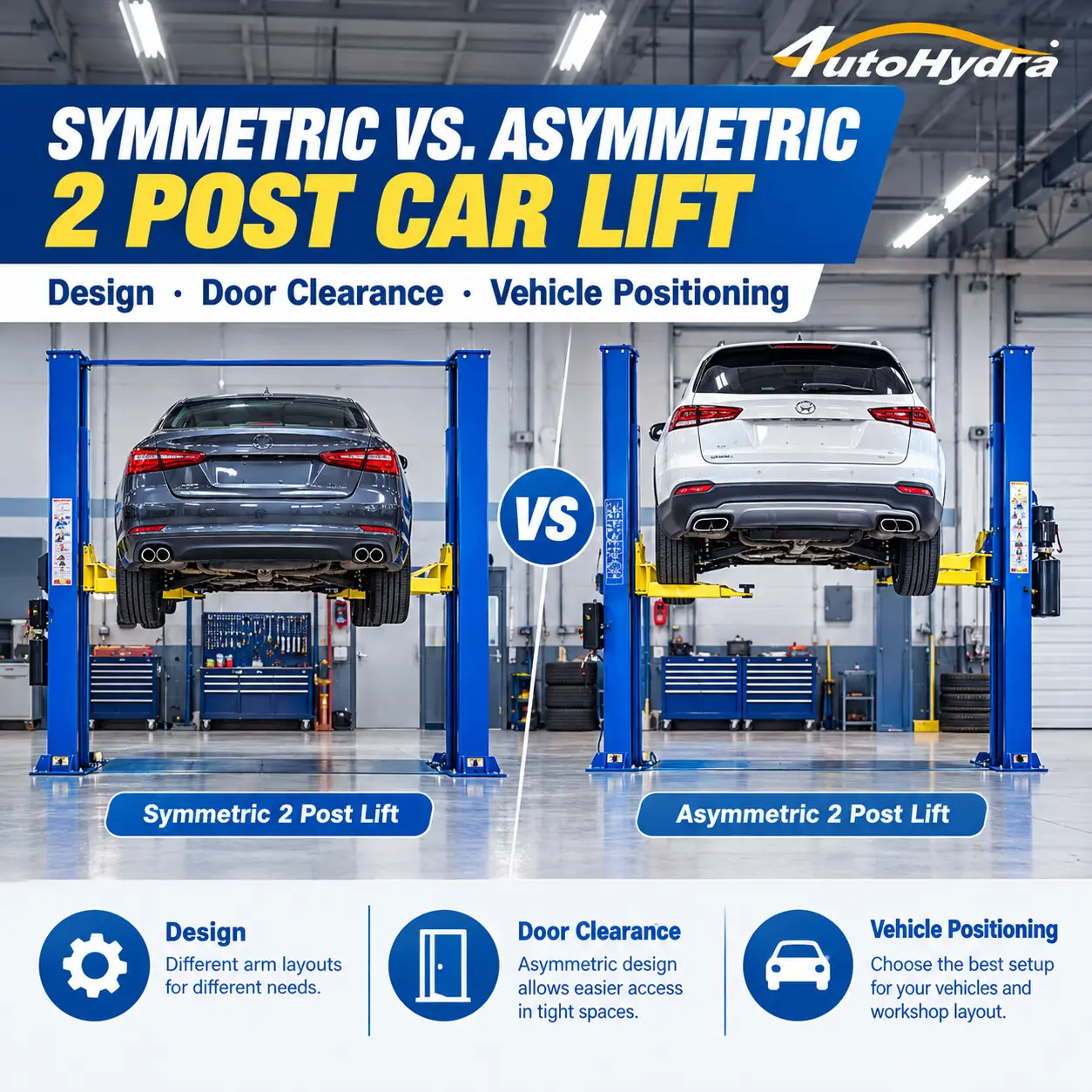
2 post lifts require special attention because vehicles are supported through lifting arms.
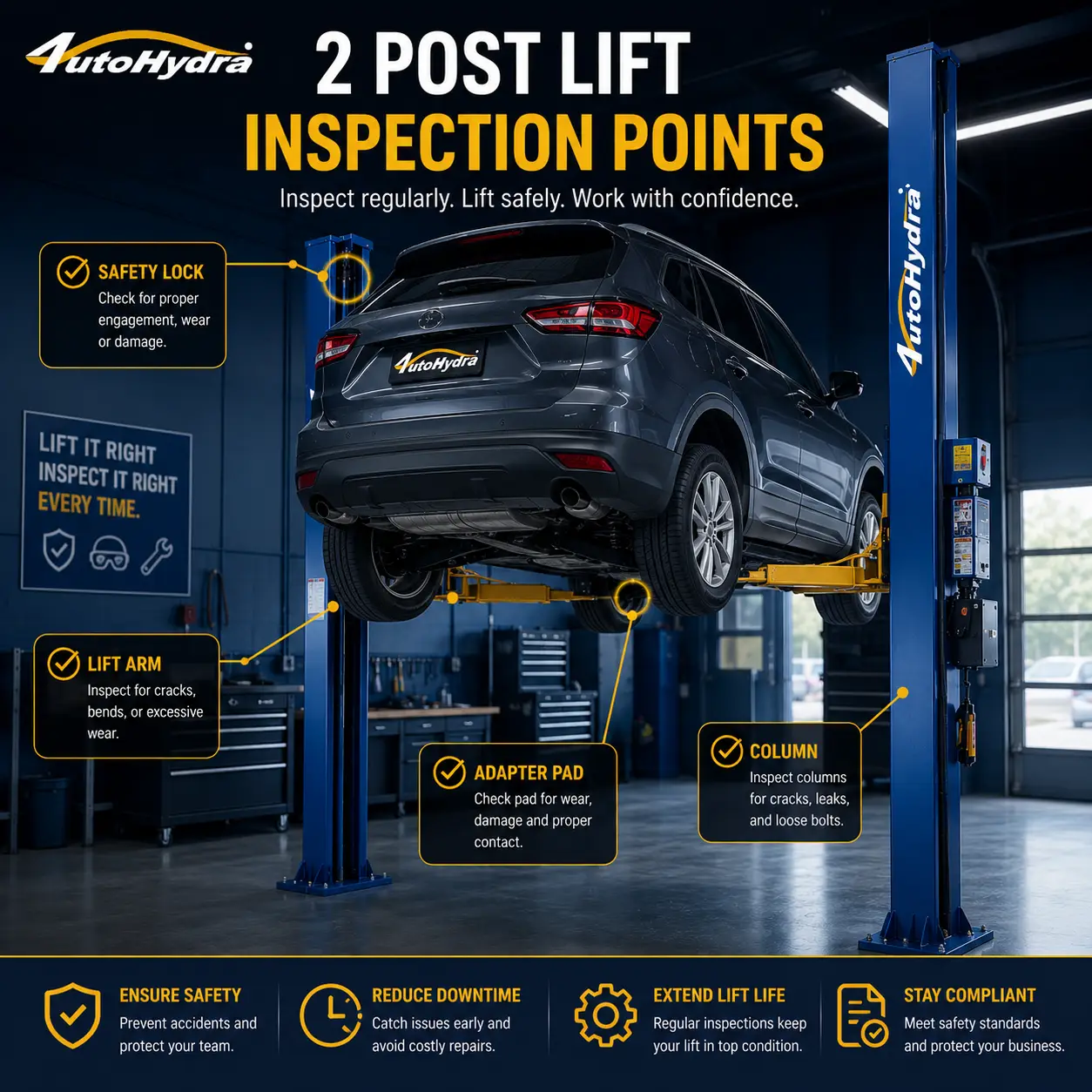
Lift Arms
Check:
● Arm movement
● Locking mechanism
● Adapter pads
Safety Locks
Confirm that both columns engage evenly. A damaged locking system can create serious safety risks.
Hydraulic Synchronization
Ensure both sides rise evenly. Uneven lifting may indicate:
● Cable adjustment problems
● Hydraulic issues
● Unequal loading
For more information about different lift designs, read:
2 Post vs 4 Post Car Lift: Which Is Better?
4 Post Lift Maintenance Tips
4 post lifts are commonly used for vehicle storage and professional applications.
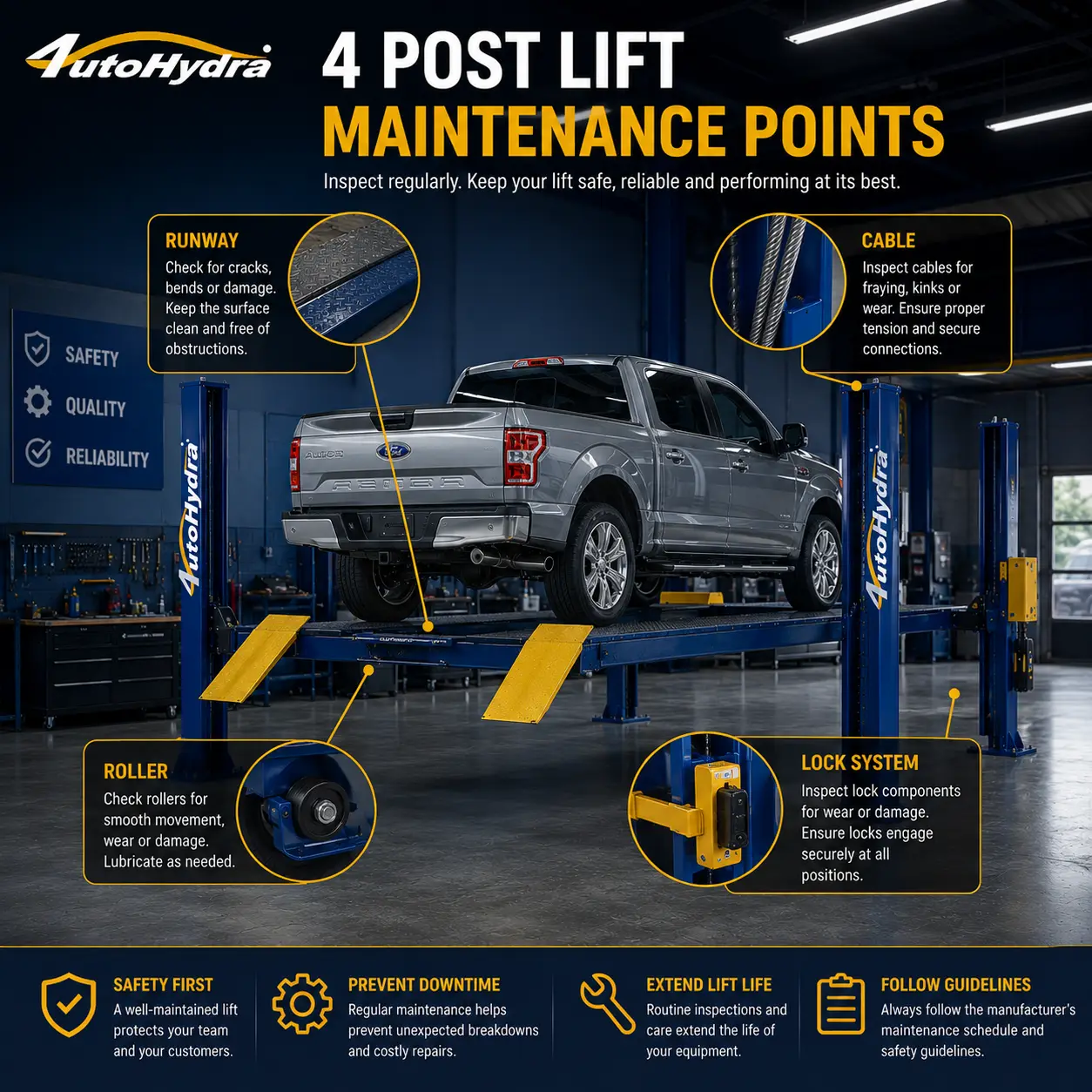
Runways
Inspect:
● Surface condition
● Alignment
● Damage
Cables and Rollers
Check:
● Cable wear
● Roller movement
● Proper tension
Safety Lock System
Make sure all locking positions engage correctly before leaving a vehicle elevated.
Common Car Lift Problems Caused by Poor Maintenance
| Problem | Possible Cause |
|---|---|
| Lift moves slowly | Hydraulic issues |
| Lift is uneven | Cable adjustment |
| Oil leakage | Damaged seals |
| Strange noise | Lack of lubrication |
| Safety lock problems | Component wear |
✅ Regular inspections help identify these issues before they become expensive repairs.
When Should Car Lift Parts Be Replaced?
Replacement may be required when components show:
● Visible damage
● Excessive wear
● Hydraulic leakage
● Reduced performance
● Abnormal noise
Common replacement components include:
● Hydraulic seals
● Cables
● Rollers
● Rubber pads
● Safety lock parts
Car Lift Maintenance Safety Tips
Always remember:
✅Never exceed lift capacity
✅Never bypass safety locks
✅Inspect before every use
✅Follow manufacturer maintenance instructions
✅Keep maintenance records
✅Train all operators properly
Frequently Asked Questions
How often should a car lift be serviced?
Daily inspections should be performed before use, while detailed maintenance should be completed monthly or according to manufacturer recommendations.
How do you maintain a hydraulic car lift?
Regularly check hydraulic oil, inspect hoses, monitor leaks, and keep moving components properly lubricated.
How often should lift cables be replaced?
Replacement depends on usage, wear, and manufacturer recommendations. Inspect cables regularly for damage or corrosion.
Do 2 post and 4 post lifts require different maintenance?
Yes. A 2 post lift requires more attention to lift arms and synchronization, while a 4 post lift requires inspection of runways, cables, and rollers.
Can poor maintenance damage a car lift?
Yes. Neglected maintenance can accelerate component wear and create unsafe operating conditions.
Final Thoughts
A car lift is a long-term investment, and proper maintenance protects that investment.
By following a regular inspection schedule, maintaining hydraulic components, checking safety systems, and addressing small issues early, you can keep your automotive lift operating safely for years.
AUTO HYDRA provides professional automotive lifting solutions designed for repair shops, service centers, and home garages.
Explore our complete Car Lift Collection.
Need Help Maintaining Your Car Lift?
Get expert advice from AUTO HYDRA's service team — we can help you set up a maintenance schedule, source replacement parts, or choose a new lift.
✔️ Maintenance guides · ✔️ OEM replacement parts · ✔️ Fast shipping
Recommended News
View all