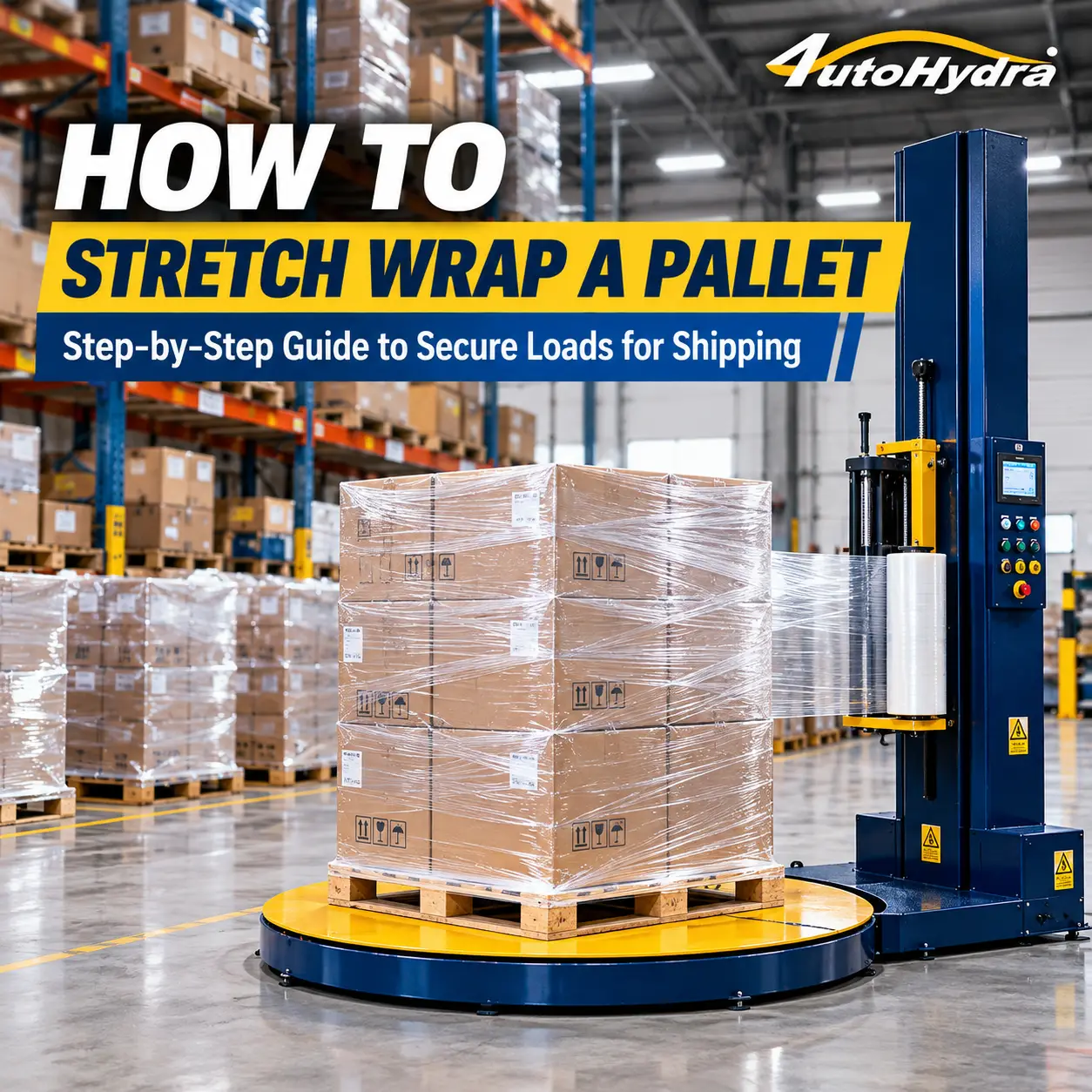
How to Stretch Wrap a Pallet: Step-by-Step Guide to Secure Loads for Shipping
Stretch wrapping is an essential step in preparing palletized goods for storage, handling, and shipment. When applied correctly, stretch film helps hold cartons together, connect the load to the pallet, and reduce unwanted movement during transportation.
However, wrapping a pallet involves more than simply pulling film around a stack of boxes. Poor load arrangement, weak base wrapping, inconsistent film tension, and insufficient coverage can all lead to shifting loads, damaged packaging, and additional handling costs.
In this guide, you will learn how to stretch wrap a pallet step by step, avoid common mistakes, and determine when a pallet stretch wrapping machine can improve consistency and warehouse productivity.
📖 If you are planning to upgrade your packaging process, you can also read our complete guide to choosing a pallet stretch wrapping machine.
What Is Pallet Stretch Wrapping?
Pallet stretch wrapping is the process of applying stretch film around products stacked on a pallet to help stabilize them as a single unit.
Stretch film stretches during application and then applies a holding force around the load. The effectiveness of the wrap depends on factors such as load shape, film properties, application tension, overlap, and the number of layers applied.
A properly wrapped pallet can help:
✅Keep cartons and products grouped together during handling
✅Reduce load movement during routine warehouse operations
✅Protect packaging from dust and light surface contamination
✅Improve consistency during staging, storage, and shipping preparation
✅Reduce the need for repeated manual adjustments to unstable loads
⚠️ Stretch film is not a substitute for proper stacking, pallet quality, or appropriate shipping restraints. Loads must still be prepared according to their weight, dimensions, handling conditions, and transportation requirements.
What Do You Need Before Wrapping a Pallet?
Before starting, prepare the following equipment and materials:
1. A Suitable Pallet
Use a pallet that can safely support the load. Check for broken boards, protruding nails, damaged corners, and other defects that could compromise stability or puncture the film.
2. Stretch Film
Choose film suitable for the product's weight, shape, surface, and handling conditions. Sharp edges, irregular shapes, and heavy loads may require different film specifications or additional protective materials.
3. A Stable Product Load
Stack cartons evenly, keep the load within the pallet footprint where possible, and place heavier items below lighter items when the product and stacking requirements allow.
4. A Film Dispenser or Pallet Wrapping Machine
Hand wrapping may be practical for occasional, low-volume applications. A pallet stretch wrapping machine can provide a more repeatable wrapping pattern for regular warehouse operations.
5. Appropriate Safety Equipment and Workspace
Keep the floor clear of loose film, damaged pallets, and other obstacles. Follow workplace procedures for moving heavy loads and operating powered equipment.
How to Stretch Wrap a Pallet: Step-by-Step Instructions
Step 1: Build a Stable Pallet Load
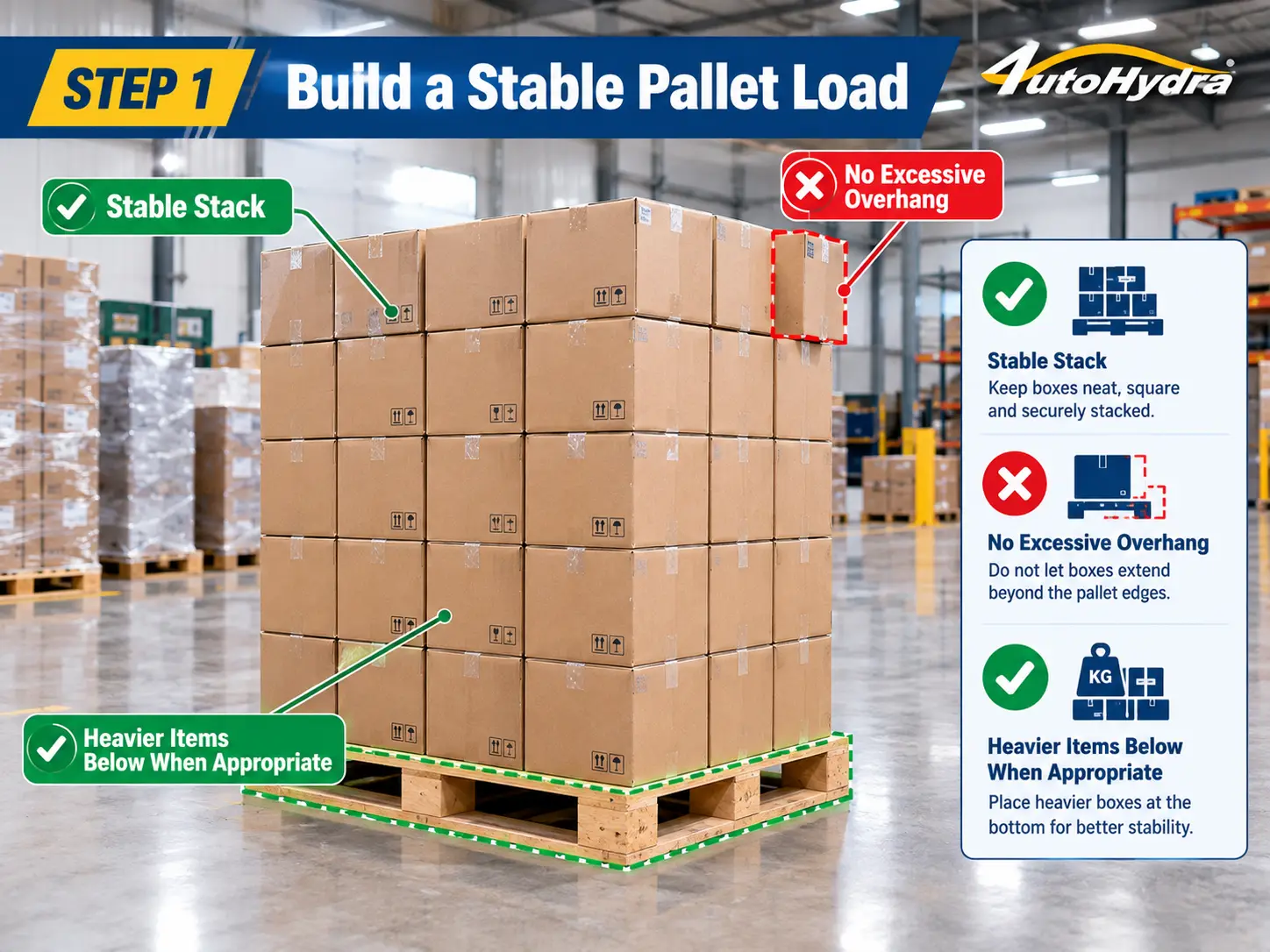
The wrapping process starts before the film touches the pallet.
Arrange cartons in a stable, balanced pattern. Avoid leaning stacks, large unsupported gaps, and excessive overhang beyond the pallet edges. Make sure the load is suitable for the pallet and can be handled safely.
For mixed products or irregularly shaped items, consider whether corner boards, layer sheets, or other packaging materials are needed to improve stability and protect vulnerable edges.
⚠️ Important: Stretch film cannot turn an unstable stack into a reliably stable load. Correct the stacking arrangement before wrapping.
Step 2: Attach the Film to the Pallet Base
The bottom of the load is one of the most important areas to secure.
Start by attaching the film to a suitable corner or section of the pallet. Depending on the film and application method, you can secure the film end around a pallet corner or use another suitable anchoring technique.
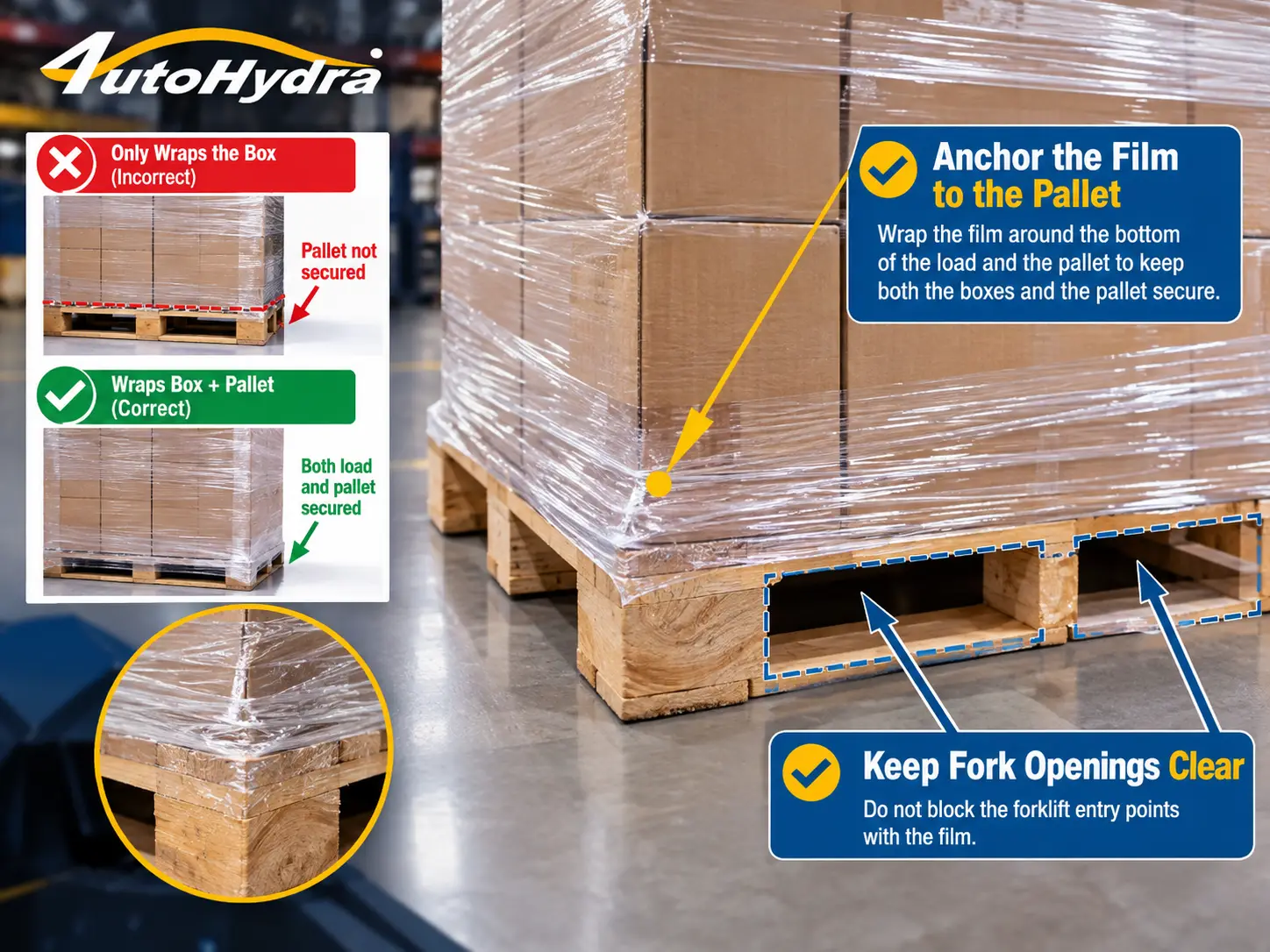
Apply several initial wraps around the lower section, making sure the film connects the load to the pallet rather than covering only the cartons.
⚠️ Keep the film clear of forklift and pallet-jack entry openings. Film stretched across these openings can tear during handling and interfere with normal material movement.
A common starting point is approximately three or more base revolutions, but the appropriate pattern depends on the load, film, and handling requirements.
Step 3: Wrap from the Bottom to the Top
Once the base is anchored, continue wrapping upward in a spiral pattern.
Move steadily and maintain consistent film tension. As a practical starting point, overlap each pass by approximately 50% of the film width. This helps create more continuous coverage and reduces uncovered gaps.
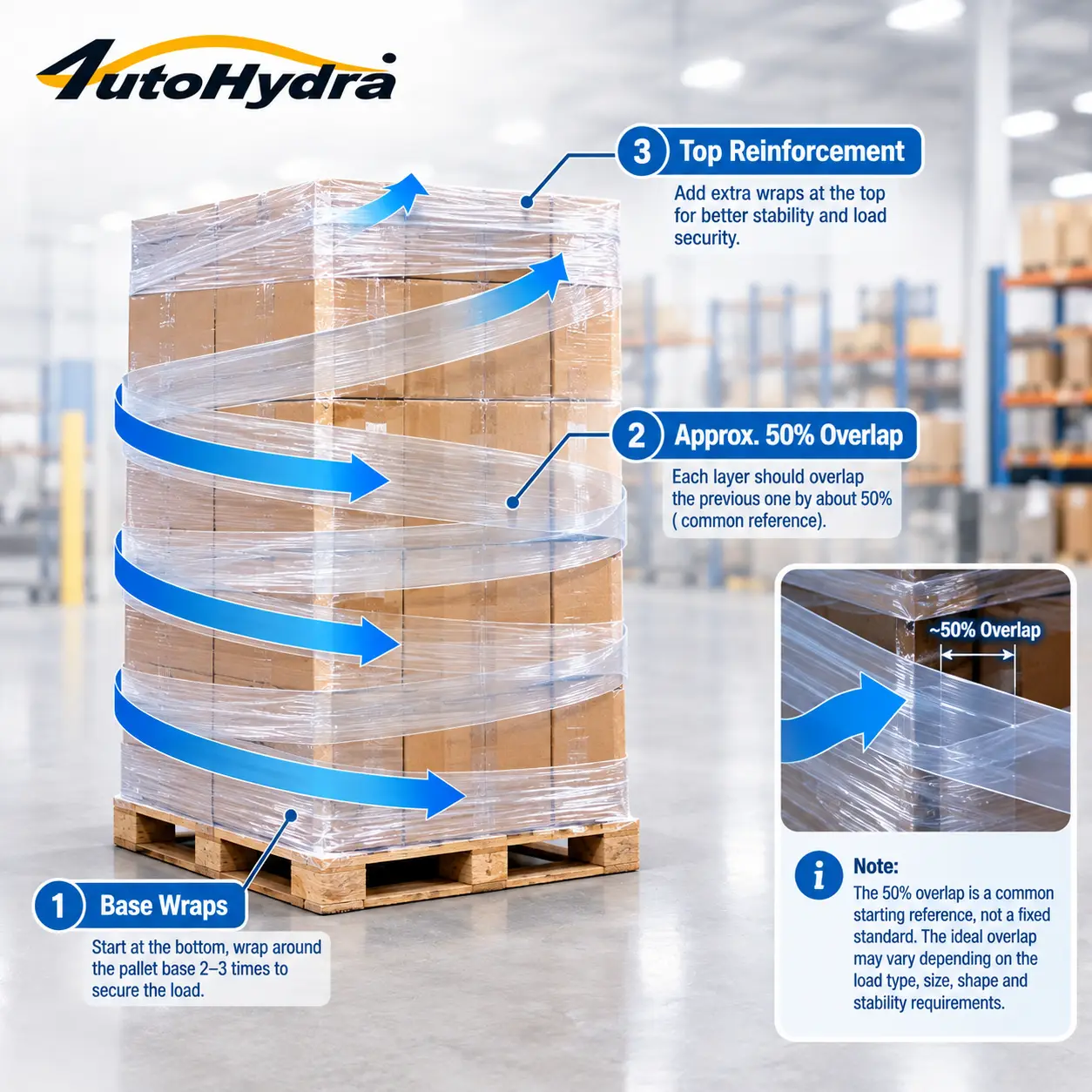
Pay attention to the following areas:
✅Lower section: Provide sufficient coverage to help connect the load to the pallet.
✅Middle section: Maintain consistent coverage, especially around mixed cartons or areas where products may shift.
✅Upper section: Make sure the top layer and vulnerable corners are adequately contained.
💡 Do not assume that more tension always produces a better result. Excessive tension can crush lightweight cartons, distort packaging, or cause film to tear.
The goal is to create an appropriately contained load without damaging the products or their packaging.
Step 4: Secure the Top of the Load
When you reach the top, apply additional wraps as needed to secure the upper layer.
A common starting point is two or more revolutions at the top, followed by a downward spiral when additional coverage is required. The correct number of wraps depends on the load's shape, stability, film characteristics, and shipping conditions.
If the top layer is uneven or contains exposed edges, evaluate whether a suitable top sheet or corner protection is needed.
⚠️ Do not simply pull the film as tightly as possible around the top. Lightweight cartons may deform under excessive pressure.
Step 5: Finish and Secure the Film End
After completing the wrapping pattern, cut the film using an appropriate tool or the machine's designated cutting method.
Press or tuck the film end against a suitable wrapped surface so it does not hang loosely or unwind during handling.
Check that the finished film does not obstruct product labels, handling openings, or required identification information.
Dispose of film scraps and cores promptly to keep the work area clear.
Step 6: Inspect the Finished Pallet
Before moving the pallet to storage or shipping, conduct a visual and practical inspection.
Check the following:
✅ The load remains stable and reasonably square
✅ The film connects the load to the pallet
✅ There are no major gaps, tears, or loose sections
✅ Cartons have not been crushed by excessive film tension
✅ Forklift and pallet-jack entry openings remain usable
✅ Shipping labels and required product information remain visible
✅ The pallet is suitable for the intended handling and transport conditions
For high-value, heavy, unstable, or frequently shipped loads, establish a documented inspection and testing process appropriate to the application.
💡 A neat-looking pallet is not necessarily a secure pallet. If the load shifts, leans, or separates during handling, review the stacking arrangement, film selection, wrap pattern, and containment force.
Five Common Pallet Stretch Wrapping Mistakes to Avoid
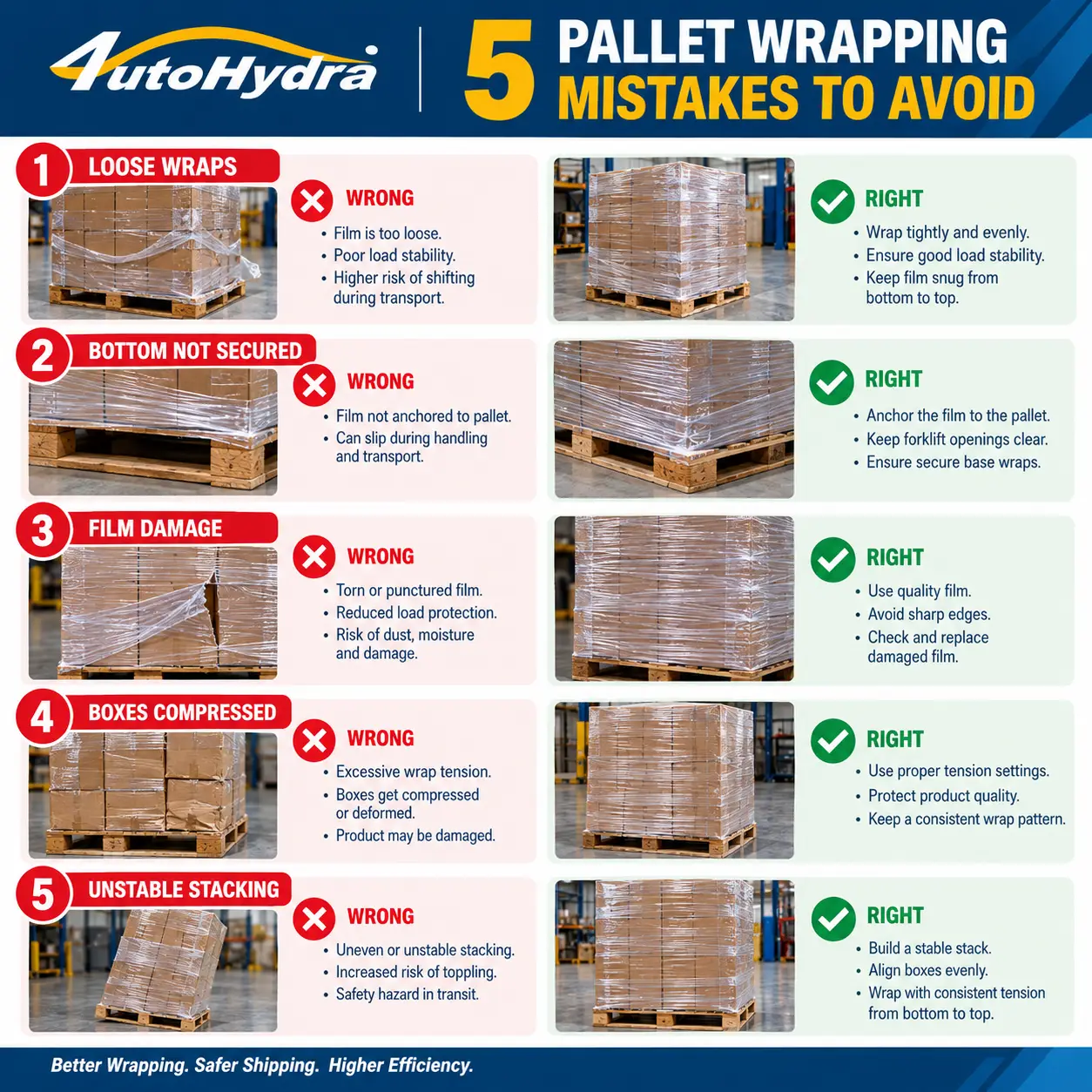
❌ Mistake 1: Wrapping Only the Cartons
If the film holds the cartons together but does not adequately connect them to the pallet, the entire load may slide relative to the pallet during handling.
How to improve it: Make the base wrapping part of the load's anchoring pattern while keeping handling openings clear.
❌ Mistake 2: Using Inconsistent Film Overlap
Large gaps between film passes can leave weak areas, while unnecessarily heavy overlap can increase material consumption.
How to improve it: Use a consistent spiral pattern. Approximately 50% overlap is a useful starting point, but adjust the pattern based on the actual load and packaging requirements.
❌ Mistake 3: Applying Too Much Tension
Excessive tension can damage cartons, distort lightweight products, and tear film around sharp edges.
How to improve it: Match the film and application settings to the load. Use corner protection where appropriate and verify that the finished package remains undamaged.
❌ Mistake 4: Ignoring an Unstable Load
Wrapping a leaning or poorly stacked pallet may conceal the problem without resolving it.
How to improve it: Rebuild the load before wrapping. Use suitable pallets and additional packaging materials when required.
❌ Mistake 5: Leaving Loose Film Ends or Obstructed Openings
Loose film can unwind or become caught during handling. Film covering pallet entry openings can be torn by forks or pallet-jack components.
How to improve it: Secure the film end and inspect the pallet's handling openings before moving the load.
For a more detailed purchasing comparison, see our guide to choosing the right pallet stretch wrapping machine.
When Should You Consider an Automatic Pallet Stretch Wrapping Machine?
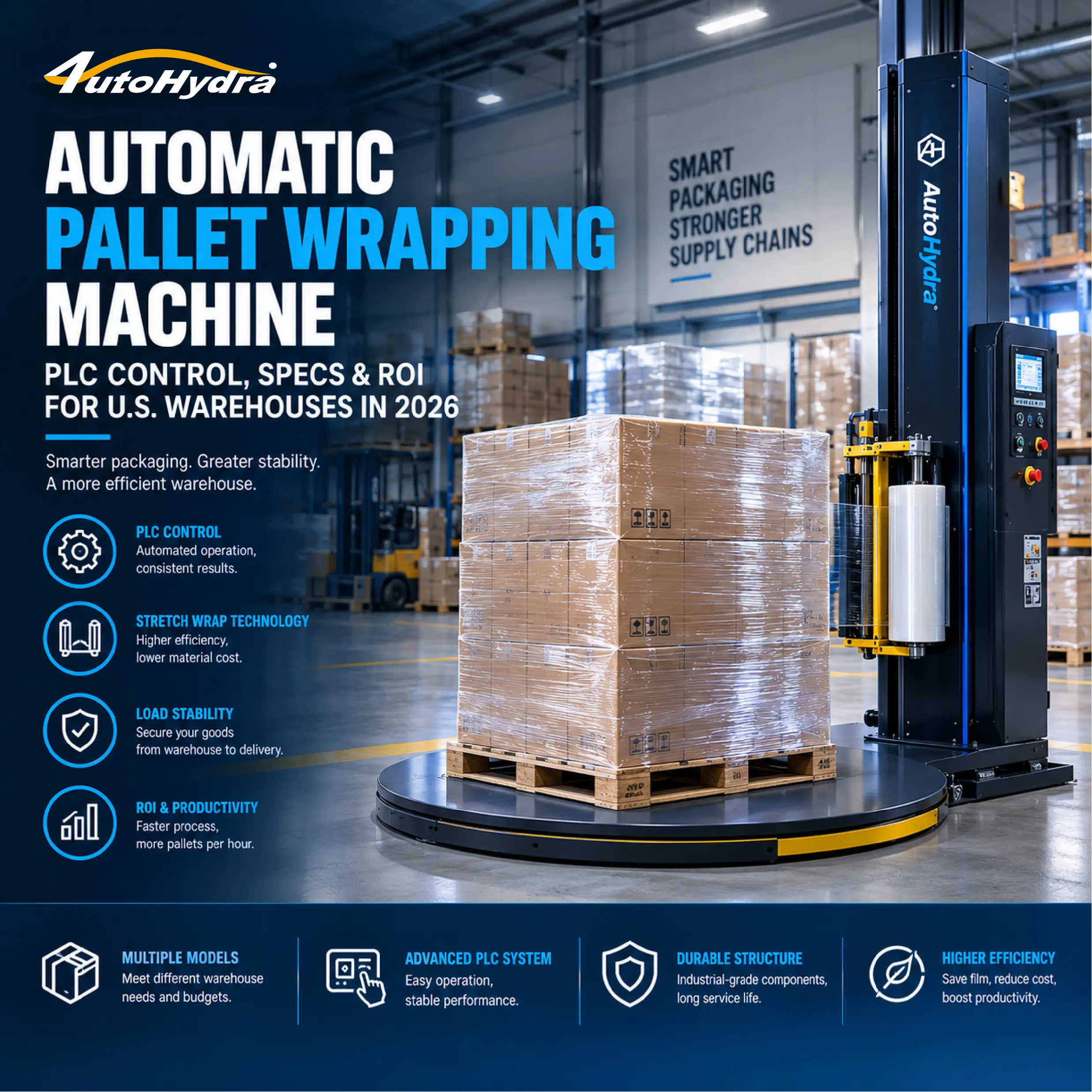
A pallet wrapping machine may be worth evaluating when your warehouse wraps pallets regularly, needs more consistent packaging, or wants to streamline the final stage of order preparation.
Consider a machine when:
● Operators spend substantial time wrapping pallets manually
● Your business prepares multiple pallet loads throughout the day
● Consistent wrapping patterns are important across shifts
● Manual wrapping creates an unnecessary physical workload
● Your team wants a defined station for wrapping and shipping preparation
● You need a more repeatable way to integrate wrapping into your workflow
Before purchasing, assess pallet dimensions, maximum load weight, loading method, available floor space, electrical supply, and any weighing or documentation requirements.
📖 For a practical selection framework, read our pallet stretch wrapping machine buying guide.
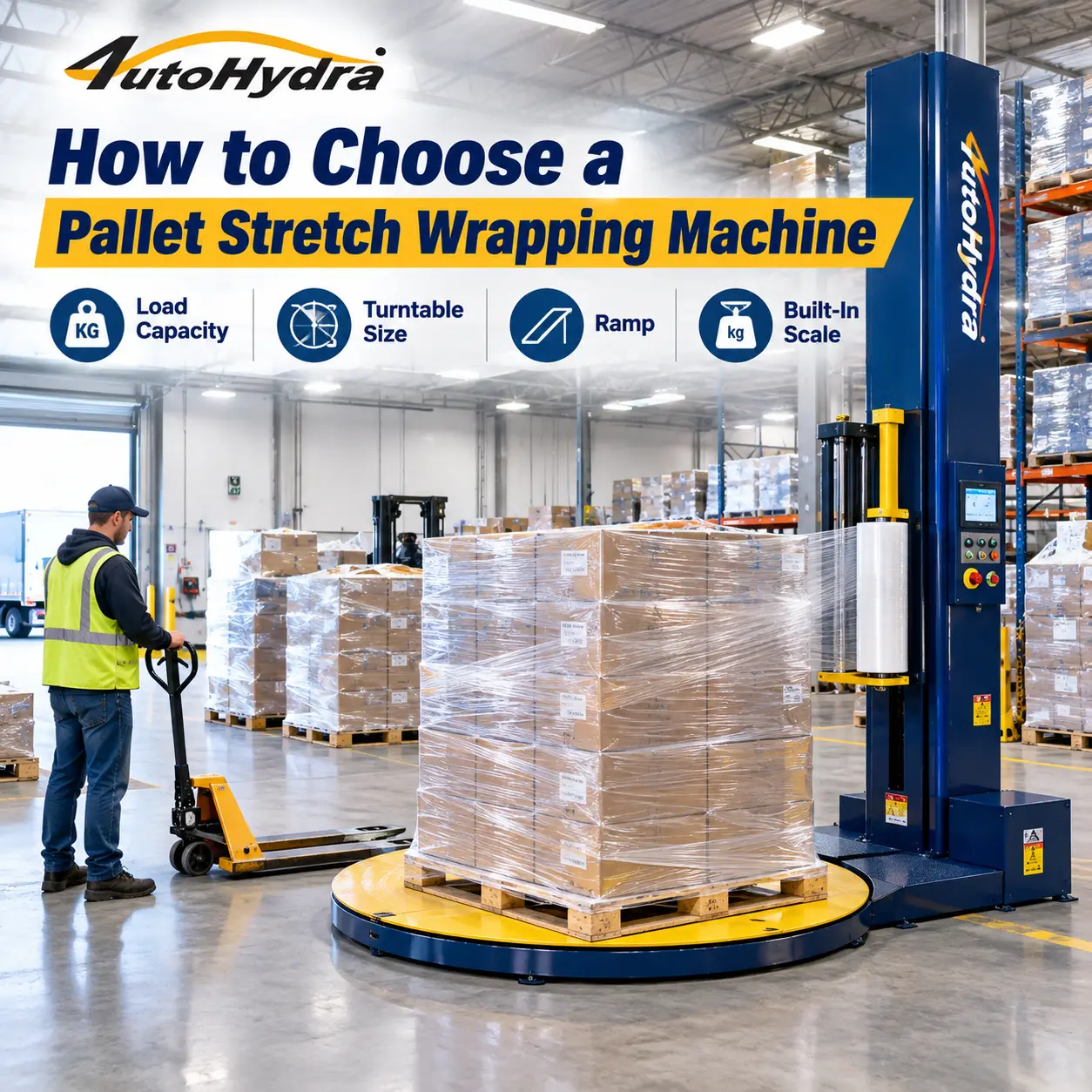
How to Choose Between These Three Configurations
Choose based on the operational requirement that matters most:
● Loading method: Compare the ramp configuration with your existing pallet-moving equipment and available floor space.
● Turntable application: Confirm that the 65-inch turntable suits your pallet footprint and load arrangement.
● Weighing requirements: Consider the built-in-scale model if weighing is part of your normal shipping workflow.
● Load capacity: Check the rated capacity against the complete loaded pallet, not just the product cartons.
● Installation requirements: Confirm electrical supply, operating clearances, floor conditions, and the manufacturer's setup requirements.
💡 A machine should fit the complete workflow—from bringing the pallet to the station through wrapping, weighing if required, inspection, and shipment.
Frequently Asked Questions
How many times should you wrap a pallet?
There is no universal number of wraps for every load. A practical starting pattern may include three or more revolutions around the base, a spiral upward with approximately 50% overlap, and two or more revolutions at the top. Adjust the pattern according to the load, film, handling conditions, and required stability.
Should stretch wrap go around the pallet itself?
Yes, the base wrapping should help connect the load to the pallet. If the film surrounds only the cartons, the load may move independently of the pallet. Keep forklift and pallet-jack entry openings clear.
Is 50% overlap necessary when wrapping a pallet?
Approximately 50% overlap is a common starting point because it helps create continuous film coverage. However, the ideal pattern depends on film width, load dimensions, equipment settings, and the required containment force.
Can stretch film prevent all shipping damage?
No. Stretch film helps contain palletized goods, but it cannot correct poor stacking, damaged pallets, unsuitable packaging, or inadequate transport restraints. Use additional protective or securing methods when the load and shipping conditions require them.
Is a pallet wrapping machine better than hand wrapping?
A machine may provide more repeatable application and reduce the need for operators to walk around each pallet. It is particularly worth evaluating for recurring wrapping tasks. Manual wrapping may remain practical for low volumes, irregular jobs, or operations where equipment investment is not justified.
What should I check before buying a pallet stretch wrapping machine?
Start with maximum loaded pallet weight, pallet dimensions, loading method, turntable size, electrical supply, floor space, and expected wrapping volume. If weighing is part of your process, also verify the scale's specifications and compatibility with your shipping requirements.
Need Help Choosing the Right Pallet Wrapping Machine?
Get a free application assessment from Auto-Hydra's warehouse equipment experts — we'll help you match load capacity, turntable size, loading method, and workflow requirements to the right configuration.
🛒 Browse Pallet Wrapping Machines
✔️ Free consultation · ✔️ Application-matched recommendations · ✔️ Fast shipping from US
Recommended News
View all