Picking the Right Garage Hydraulic Lift for a Busier Tomorrow
Summary
A garage hydraulic lift is no longer a luxury reserved for dealership service centers — it has become the daily workhorse behind fast turnarounds, safer repairs and tighter profit margins in modern workshops of every size. As vehicle designs get heavier, electric powertrains get more common and customer expectations keep climbing, the right lift decides whether a bay earns money or wastes hours. This guide walks you through how to choose, run and maintain garage hydraulic lifts that fit the way your shop actually works.
1. How Garage Hydraulic Lifts Reshape the Modern Workshop
When technicians can lift a vehicle to a comfortable working height in under a minute, every other task under the car gets easier. Wheel removals, brake swaps, suspension overhauls, exhaust work and underbody inspections all become faster, cleaner and far less physically punishing. That is the real return on a quality garage hydraulic lift — fewer injuries, shorter labor hours and more jobs finished before the end of the shift.
AUTO HYDRA INC supplies professional grade automotive, garage and warehouse equipment through direct manufacturer pricing, with strategically located warehouses and offices across the United States to keep delivery times short. Whether you run a multi-bay commercial shop, a mobile service fleet or a serious home garage, pairing the right lift with the right accessories turns the bay into a true productivity center. For a deeper look at how a shop lift changes day to day operations, our earlier piece Home Car Lift covers the essentials every first-time buyer should know.
2. The Three Garage Hydraulic Lift Designs Worth Knowing
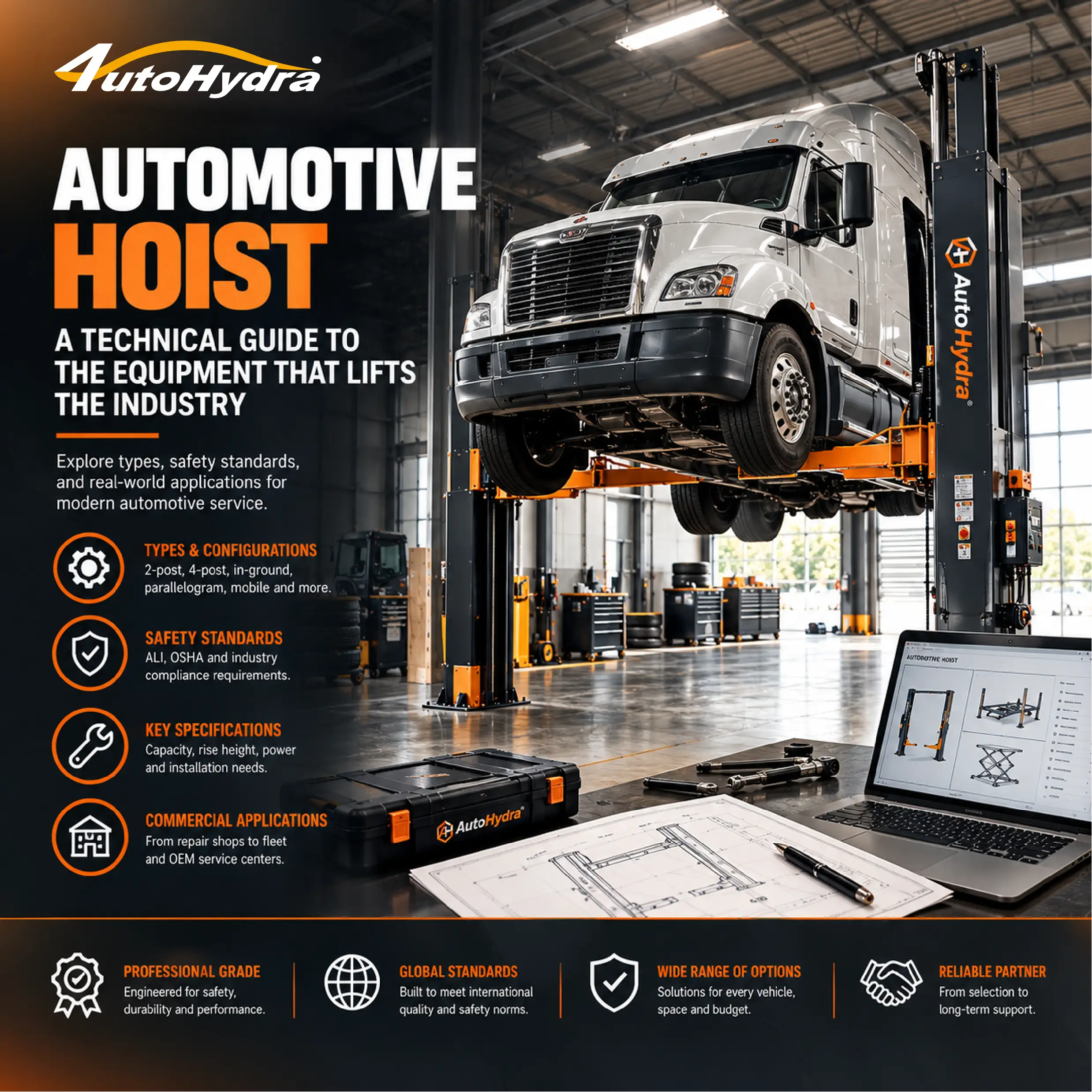
Before buying, it pays to understand the three core designs because each one solves a different workshop problem.
📌2.1 Two Post Lifts The Service Bay Backbone
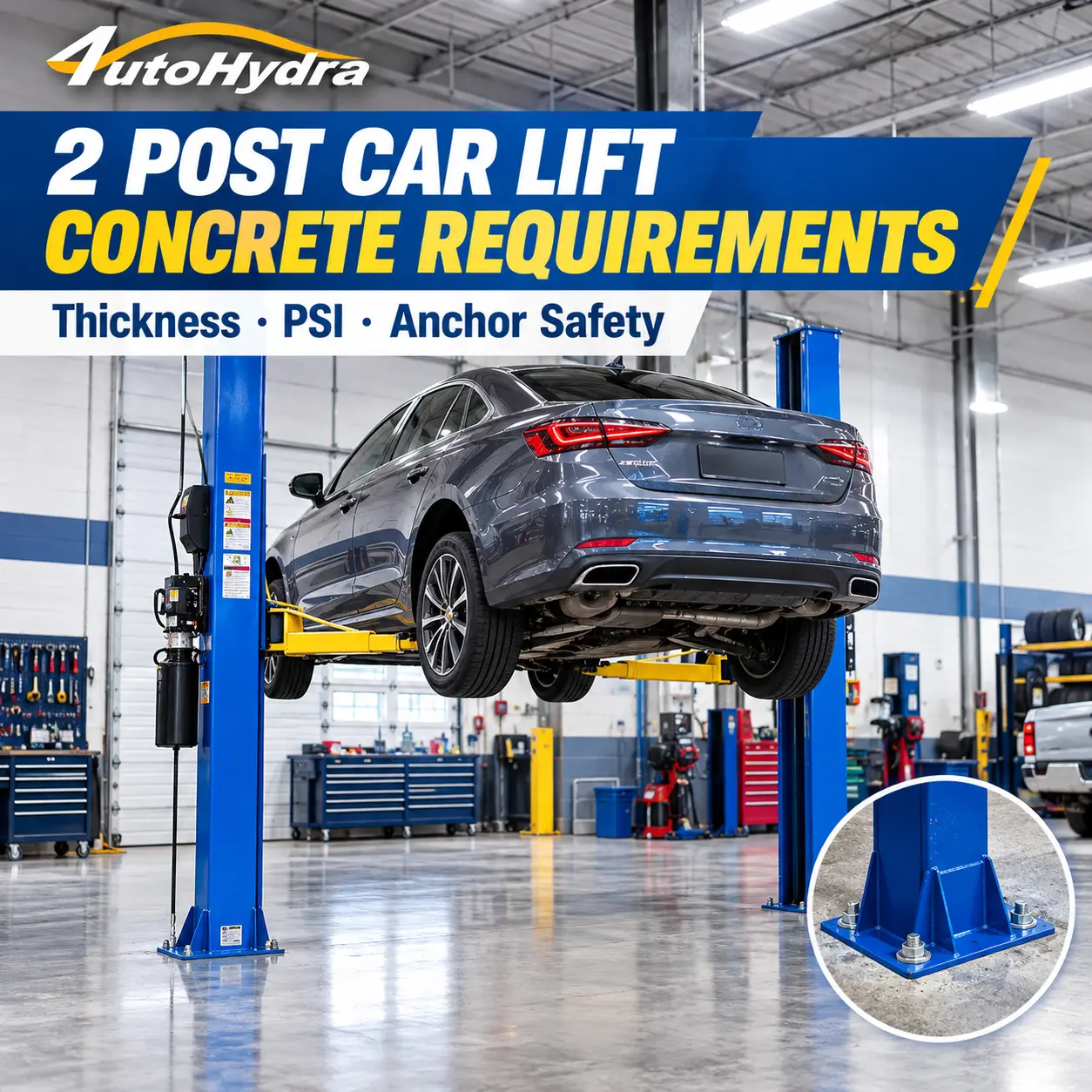
Two post lifts are the most popular choice for professional mechanical work because they lift vehicles by the frame, opening up wheels, brakes, suspension and undercarriage for full access. They handle engine rebuilds, transmission swaps and clutch jobs effortlessly, which is why most independent shops anchor their service bays to one.
Models like the Katool H115Z 11,000lbs Two Post Lift feature a base-plate design that simplifies installation, while the Katool KT-H120D 12,000lbs Two Post Lift delivers extra muscle for heavier SUVs and light trucks without taking up extra bay space.
📌2.2 Four Post Lifts Stability Plus Storage
Four post lifts carry the vehicle on runways, which makes them feel rock solid under load and ideal for wheel alignment, longer-term storage and parking dense work. Many technicians pair a four-post with a rolling jack to free the wheels for brake service, creating a flexible combination that bridges storage and repair duty.
For bays focused on alignments and storage, stacking capability makes four-post designs a smart long-term investment because the lift does double duty as a parking spot for project vehicles and customer cars awaiting parts.
📌2.3 Scissor Lifts Space Saving Speed for Tight Bays
When ceiling height is tight or floor space is at a premium, scissor lifts earn their keep. They collapse flat when not in use, raise quickly and let a single technician move cars through tire service, inspections and detail work without stretching the workflow.
The Katool KT-X95 Full Rise Scissor Lift brings 8,000 lbs of full-rise capacity to compact bays, while the Katool KT-M110 Two Post Clear-floor Vehicle Lift gives shops a wider clear-floor working area when frame-engaged service is the daily routine. For shops debating between formats, our Two Post Lift versus Four Post Auto Lift Guide walks through the decision step by step.
3. Choosing Capacity, Power and Setup for Your Garage Hydraulic Lift
Picking the wrong lift is far more expensive than picking the right one. Smart buyers match the machine to the heaviest vehicle they realistically expect to service, not the lightest car that walks in today.
📒3.1 Capacity That Matches Your Heaviest Vehicles
Always spec a lift rated above the heaviest vehicle you plan to raise, including EV battery mass, toolboxes, cargo racks and aftermarket parts. A 10,000 lbs rated two post comfortably handles most passenger vehicles and light trucks, while trucks, vans and fleet vehicles usually want 12,000 lbs or more headroom.
For workshops adding an EV service lane, plan capacity for the battery weight even on smaller models — a heavy battery pack can push a compact crossover past the working limit of a light duty lift. Most professional shops settle in the 9,000 to 12,000 lbs range as the sweet spot for daily versatility.
📒3.2 Ceiling, Column and Floor Demands
Before ordering, measure ceiling height at its lowest point, accounting for lights, sprinklers, garage door tracks and overhead piping. Low rise scissor lifts run cleanly under 8 to 9 foot ceilings, two-post lifts usually want 11 to 12 feet and four-post lifts generally need 12 to 14 feet for taller trucks and vans.
The concrete floor matters just as much. Two-post lifts typically need at least 4 inches of reinforced slab, with 6 inches strongly recommended for heavier units, while four-post designs distribute the load more evenly across runways and put less concentrated stress on any one spot. Scan the bay for cracks, hollow spots and prior patches before installation day.
📒3.3 Power Hookups, Air Supply and Daily Use
Most professional garage hydraulic lifts operate on standard 110V or 220V single-phase power, which keeps them compatible with both residential and commercial electrical service. Lifts with air-operated locks also need a steady shop air supply at the correct CFM, so plan a dedicated airline at the column when possible.
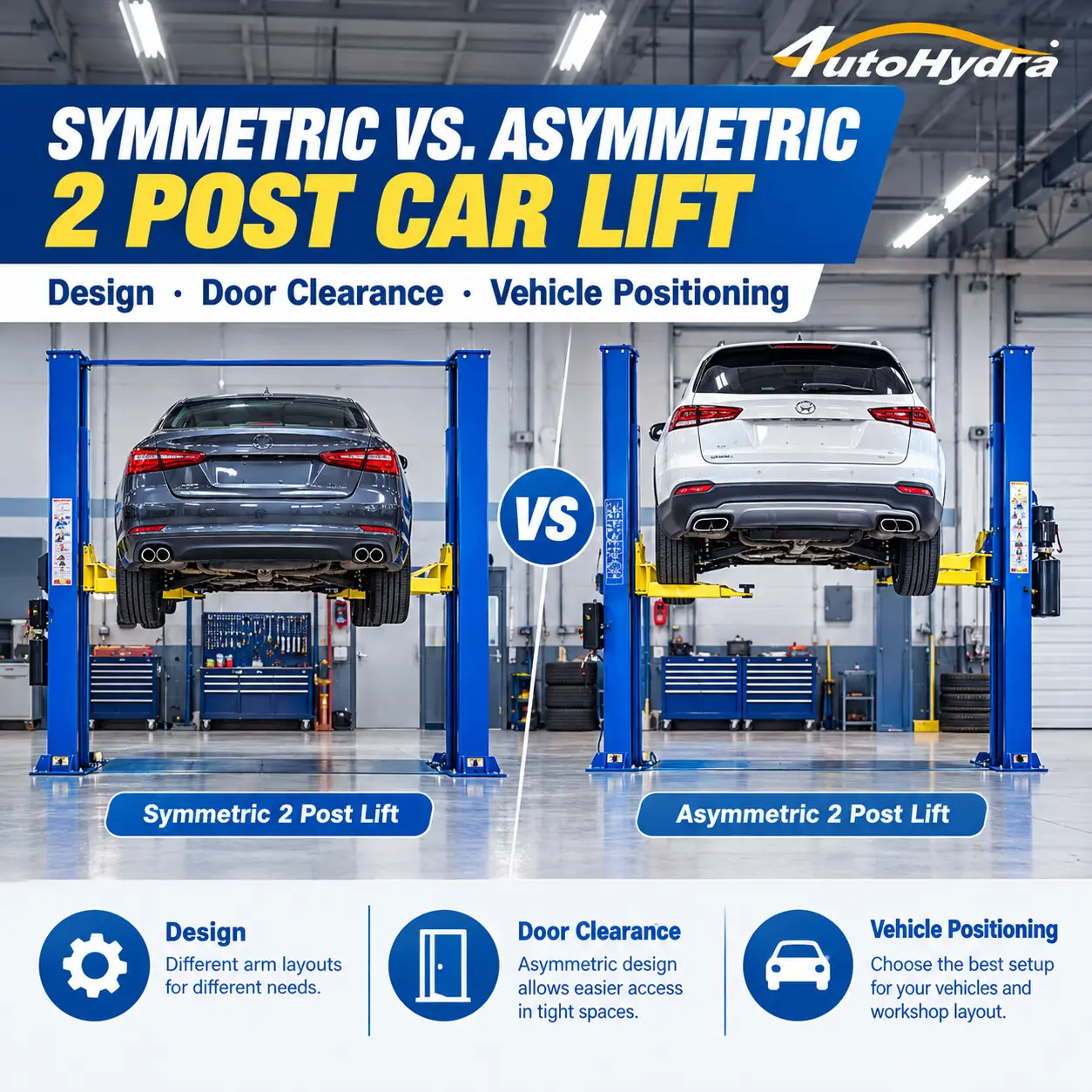
Technician comfort is another daily-use factor that is easy to overlook. Symmetrical lifts create wider drive-through clearance, asymmetrical designs open doors fully in narrower bays, and clear-floor configurations keep underbody components protected from floor-level obstructions. The right pick is the one your team will actually use, day after day, without workarounds.
4. Smart Maintenance Habits That Double Equipment Lifespan
Even the best garage hydraulic lift loses value fast without consistent maintenance. A short, repeatable routine protects technicians, prevents surprise downtime and extends the working life of every component on the machine.
Start every shift with a quick visual sweep: check the columns, arms, pads, hoses, cables and safety locks for wear, leaks or damage. Listen for unusual sounds during a test lift, confirm the safety locks engage cleanly and verify the descent is smooth and controlled. A two-minute daily check catches the issues that turn into expensive repairs if ignored.
Monthly, lubricate every pivot, roller and moving part the manufacturer calls out, check hydraulic fluid levels, torque any bolts that have loosened under vibration and inspect the equalization of cables or chains on four-post designs. Keep the floor around the lift clean of grease, debris and clutter so technicians never reach for a control across an obstacle.
Annual professional inspection by a competent technician is not optional for a busy shop. Hydraulic hoses, seal kits and wear items have predictable service lives, and replacing them on schedule is dramatically cheaper than the downtime that follows a failure mid-job. Pair the inspection with a written log so you can spot trends, schedule replacements and protect warranty coverage year over year.
5. Frequently Asked Questions About Garage Hydraulic Lifts
Q1: What is the difference between a two-post and four-post garage hydraulic lift?
A two-post lift raises the vehicle by its frame, giving full access to wheels, brakes and undercarriage components for mechanical repairs. A four-post lift drives onto runways and lifts by the wheels, making it more stable for alignment work, long-term storage and heavier daily usage. Most high-volume shops keep one of each to cover both service and parking duty.
Q2: How much ceiling height do I need to install a garage hydraulic lift?
Low rise scissor lifts operate well in 8 to 9 foot ceilings, two-post lifts generally require 11 to 12 feet of clearance and four-post lifts usually want 12 to 14 feet depending on the tallest vehicle. Always measure at the lowest point, including lights, door hardware and overhead obstructions before ordering.
Q3: Can a home garage actually fit a professional garage hydraulic lift?
Yes, many lifts are designed specifically for home installation. The key requirements are adequate ceiling height, a concrete slab thick enough for the chosen capacity, correct electrical service and a sensible approach to vehicle entry and exit. Compact mid-rise scissor lifts are often the easiest first step for serious home workshops.
Q4: How often should I perform maintenance on a garage hydraulic lift?
A visual safety check belongs at the start of every shift, looking at hoses, cables, locks and structural components. A more thorough monthly service should include lubrication, bolt torque checks and hydraulic fluid inspection. An annual professional inspection completes the cycle and protects long-term warranty coverage on the major components.
Q5: Does AUTO HYDRA provide installation guidance and warranty support for garage hydraulic lifts?
Yes, AUTO HYDRA INC supports buyers with documentation, accessory recommendations and warranty service through our nationwide network, with strategically located warehouses that keep delivery quick. Our team helps match the right lift capacity and configuration to your bay so the install day goes smoothly from the moment the truck arrives.
6. Shop Garage Hydraulic Lifts From AUTO HYDRA Today
Ready to upgrade the bay? Browse AUTO HYDRA's curated selection of professional garage hydraulic lifts built for the way modern workshops actually run. Every model is chosen to balance capacity, footprint and reliability so your team spends the day working, not waiting on equipment.
● ➡️Katool KT-H120D 12,000lbs Two Post Lift — heavy duty 12,000 lbs capacity two post lift designed for powerful daily service on SUVs, trucks and passenger vehicles.
● ➡️Katool KT-M120 Two Post Clear-floor Vehicle Lift — 12,000 lbs clear-floor two post lift delivering wide underbody access for transmission, brake and suspension work.
● ➡️Katool H115Z 11,000lbs Two Post Lift — base-plate design that simplifies installation and unloading, ideal for new shops bringing their first two post lift online.
7. Explore the AUTO HYDRA Brand and Stay Updated
Want to see the full equipment lineup behind AUTO HYDRA's professional service? Our online catalog includes lifts, tire service equipment, storage systems, material handling tools and more — everything you need to build out a complete working shop.
● 🛒Visit the AUTO HYDRA Lifts Category — browse every car lift, scissor lift and rolling jack currently available for US delivery.
● 📰Read more guides on the AUTO HYDRA News Page — keep up with new product launches, buying guides and maintenance tips from our team.
● 💡Browse the full AUTO HYDRA Product Overview — explore every category from lifts and tire equipment to storage systems and material handling tools.
For technical support, product inquiries or order assistance, call (888) 598-0133, email service@auto-hydra.sale or visit us at 3001 Bishop Dr Suite 300, San Ramon, CA 94583-5005. Trust AUTO HYDRA for quality equipment, fast USA delivery and the kind of service that keeps your bays productive year after year.
Recommended News
View all