How Hydraulic Car Lift Works: Complete Guide to Lift Systems
Hydraulic car lifts are one of the most widely used lifting solutions in automotive repair shops, service centers, and professional garages.
From two-post lifts to four-post vehicle lifts, hydraulic systems provide powerful, smooth, and reliable lifting performance for safely raising vehicles during maintenance, inspection, and repair.
But how does a hydraulic car lift actually work?
The answer lies in the interaction between several key components, including the hydraulic pump, hydraulic fluid, cylinders, valves, and control systems.
📘 Related Guide: How to Choose the Right Car Lift: Buyer's Guide
1. What Is a Hydraulic Car Lift?
A hydraulic car lift is a vehicle lifting system that uses hydraulic pressure to raise and lower vehicles.
Unlike mechanical lifting systems that rely on screws, gears, or manual force, hydraulic lifts use pressurized fluid to generate lifting power.
🔧 The Basic Principle: Hydraulic pressure creates mechanical movement.
When hydraulic fluid is pushed into a cylinder, the pressure moves a piston upward, creating the force needed to lift a vehicle.
Hydraulic systems are widely used because they provide:
✔ Smooth lifting operation
✔ High load capacity
✔ Reliable performance
✔ Precise vehicle positioning
✔ Long service life
2. How Does a Hydraulic Car Lift Work?
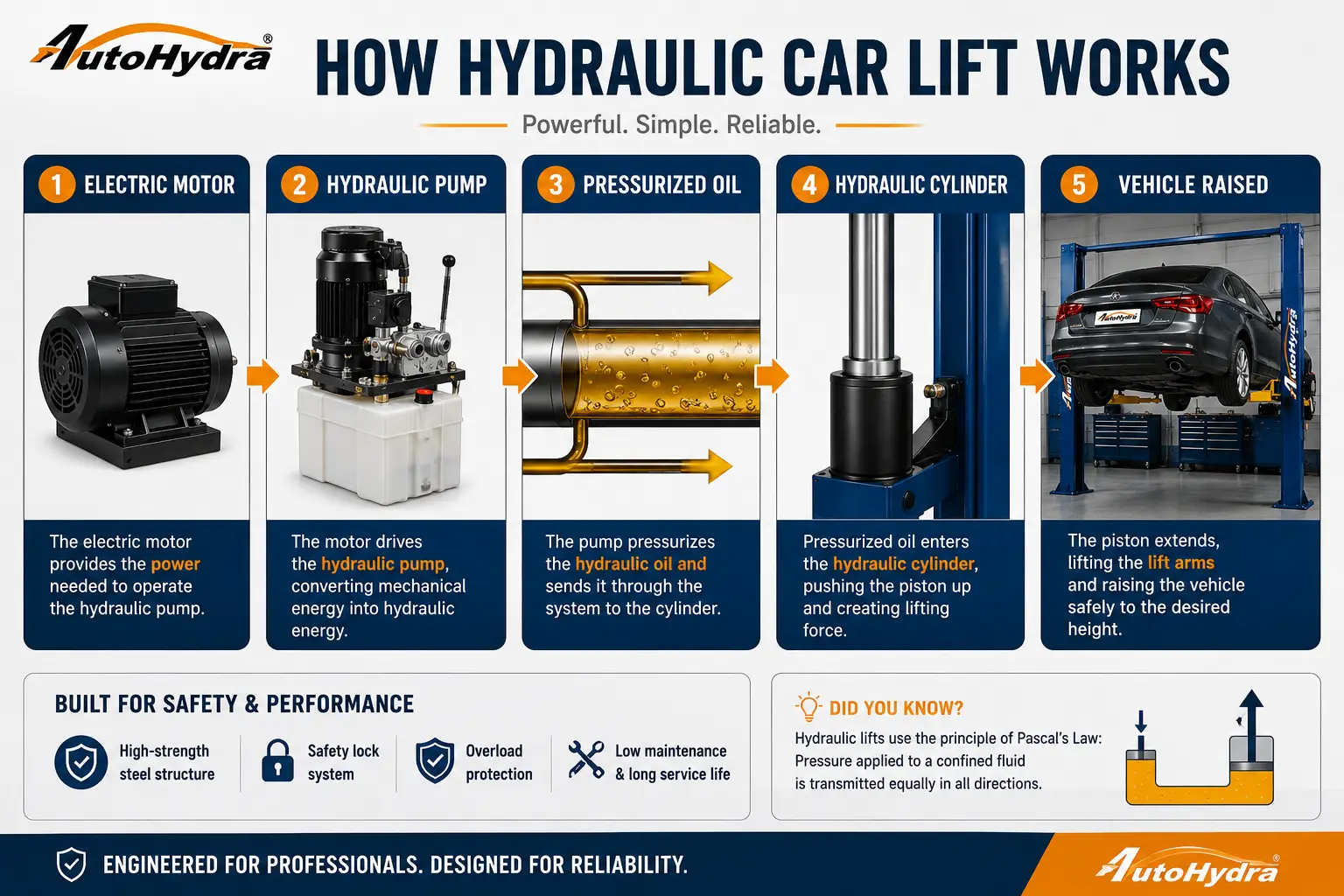
A hydraulic car lift works through a simple but powerful process. Here are the five steps:
1. Motor Powers the Pump
Operator activates control → electric motor starts hydraulic pump → pump converts mechanical energy into hydraulic pressure
2. Pump Pressurizes Oil
Hydraulic pump pushes oil through hydraulic lines → pressurized fluid creates force to move the lifting mechanism
3. Fluid Moves the Cylinder
Pressurized oil enters hydraulic cylinder → piston moves upward → creates lifting movement
4. Vehicle Is Raised
Lifting arms/platforms move upward → safety locks automatically engage → vehicle secured at selected height
5. Valve Controls Lowering
Control valve releases hydraulic pressure → oil returns to tank → controlled descent
3. Main Components of a Hydraulic Lift System
A hydraulic car lift consists of several important components working together.
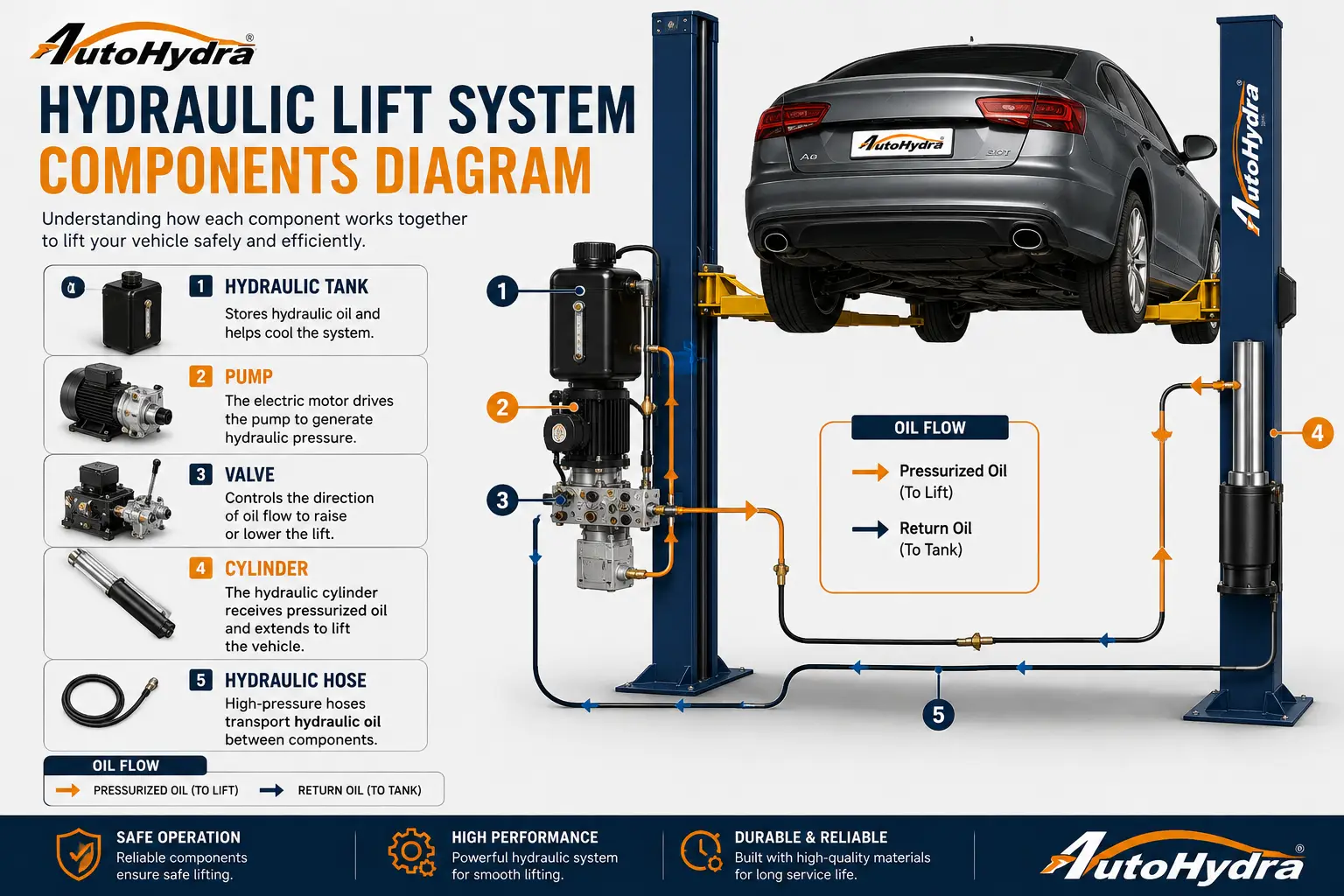
🔄 Hydraulic Pump
The power source of the lifting system. Functions: creating hydraulic pressure, moving fluid, controlling lifting speed. A properly working pump ensures smooth and consistent operation.
🔧 Hydraulic Cylinder
Converts hydraulic pressure into mechanical movement. Main components: cylinder barrel, piston, seals, hydraulic connections. Cylinder performance directly affects lifting stability.
🛢️ Hydraulic Fluid
Transfers pressure throughout the system. Good hydraulic fluid helps: reduce friction, protect components, maintain consistent operation, extend system lifespan. Low or contaminated oil can cause slow lifting and failures.
🎛️ Control Valve
Manages hydraulic oil flow. Controls: raising speed, lowering speed, pressure release. A damaged valve may cause unstable lifting or lowering problems.
🔗 Hydraulic Lines and Fittings
Hydraulic hoses connect all system components. Regular inspection is important because damaged hoses may lead to: oil leakage, reduced pressure, safety risks.
4. Hydraulic System in 2 Post and 4 Post Car Lifts
Different lift designs use hydraulic systems differently.
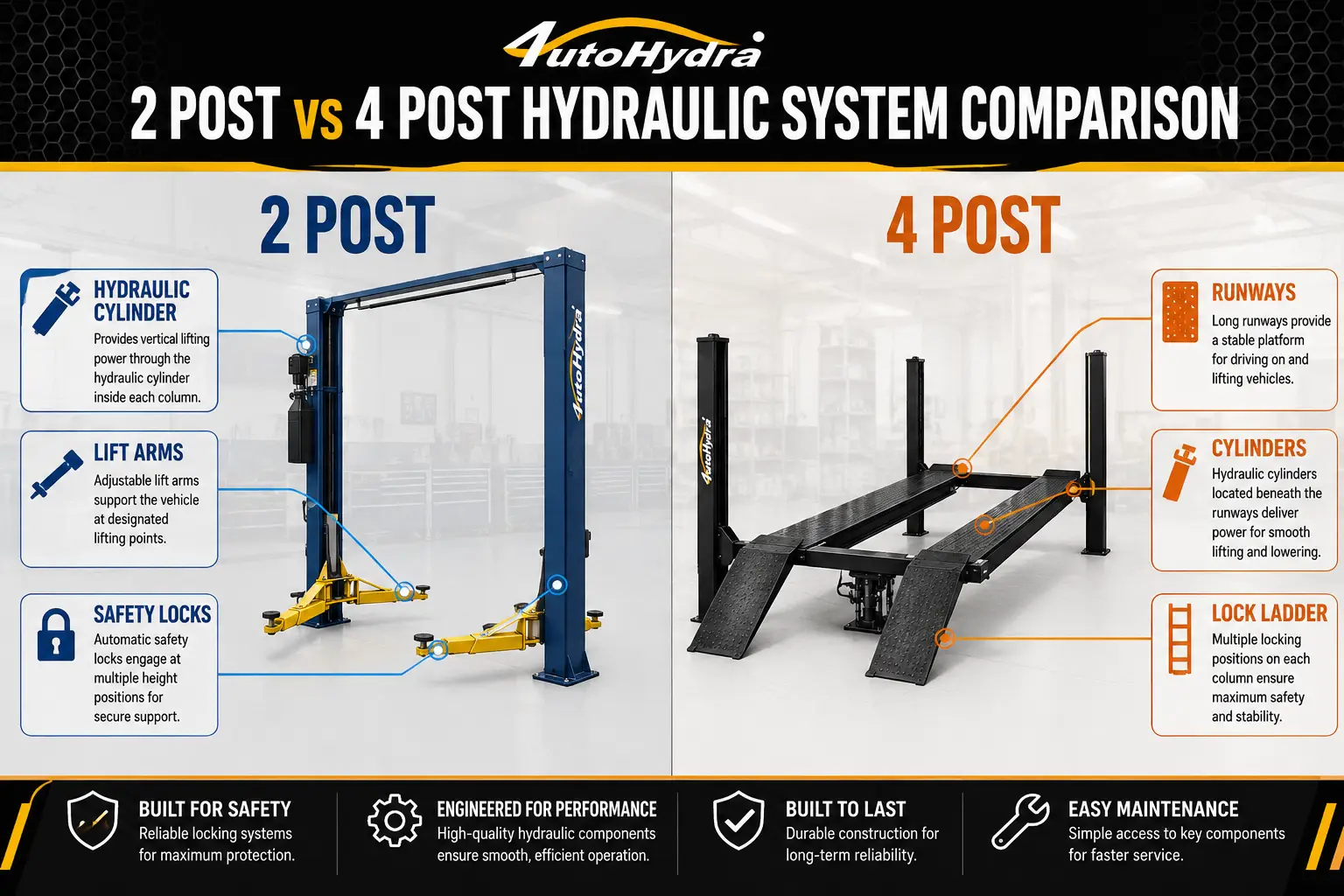
2 Post Hydraulic Car Lift
A 2 post lift typically uses hydraulic cylinders to raise lifting arms that support the vehicle frame.
Main features: Compact design, easy access to vehicle underside, popular for repair shops.
Important hydraulic-related components:
✔Hydraulic cylinders
✔Equalizer cables
✔Lift arms
✔Safety locks
📖 Learn more: 2 Post vs 4 Post Car Lift: Which Is Better?
4 Post Hydraulic Car Lift
A 4 post lift raises the vehicle using platforms or runways.
Common applications: Vehicle storage, maintenance work, professional garages.
Important components:
✔Hydraulic lifting system
✔Runways
✔Cables
✔Safety locking system
5. Advantages of Hydraulic Car Lifts
Hydraulic systems have become popular because of several advantages.
✅ Smooth Operation — Hydraulic pressure provides controlled and stable movement.
✅ High Lifting Capacity — Hydraulic systems can generate significant force while maintaining compact equipment design. Read our Car Lift Capacity Guide →
✅ Reliable Performance — With proper maintenance, hydraulic lifts can provide years of dependable service.
✅ Efficient Workshop Operation — Hydraulic lifts improve productivity by allowing technicians easier access to vehicle components.
6. Hydraulic Car Lift Maintenance Tips
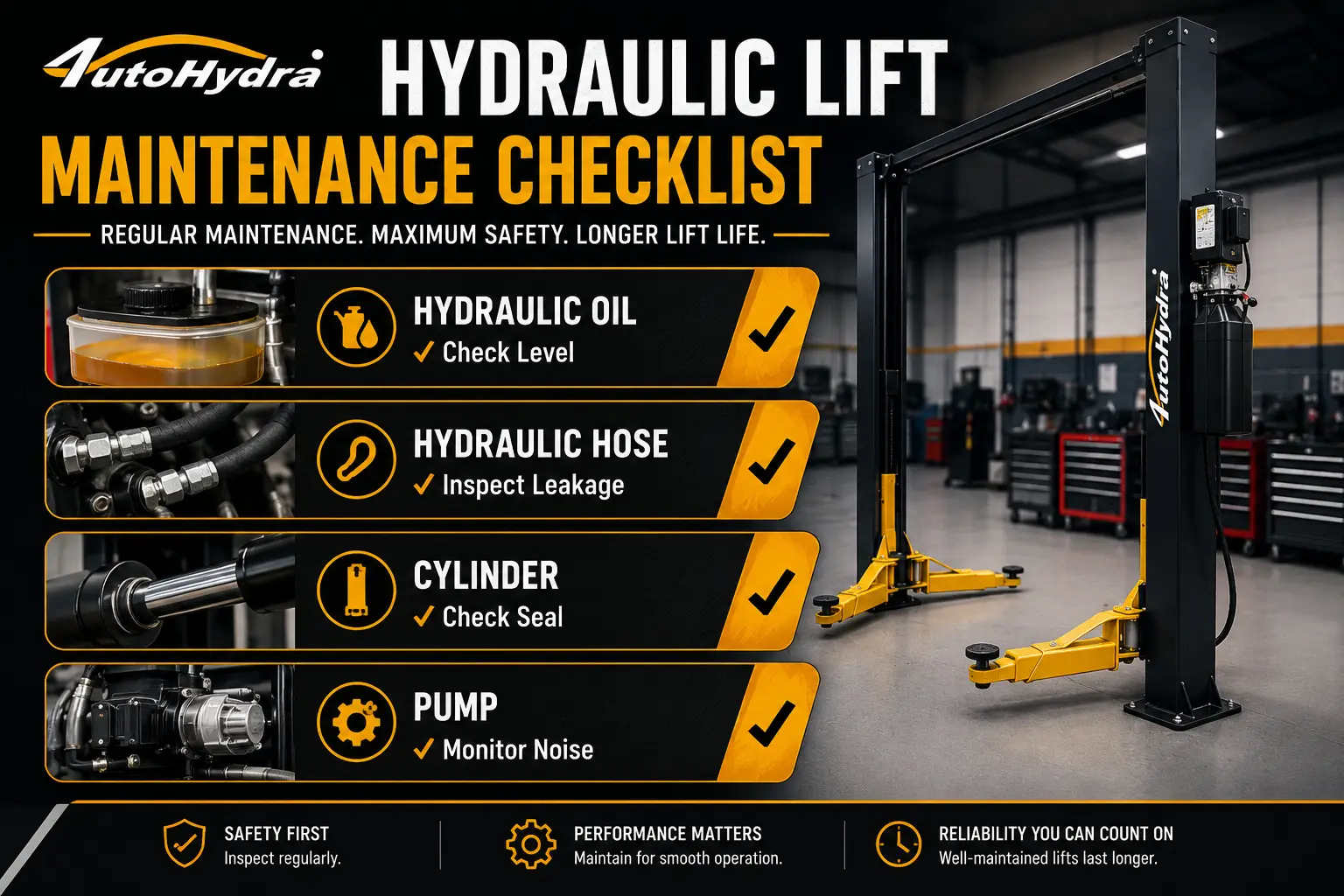
Regular maintenance helps prevent hydraulic system problems.
Check Hydraulic Oil Level
Inspect: oil level, oil quality, signs of contamination.
Inspect Hydraulic Hoses
Look for: cracks, leakage, damaged fittings.
Check Cylinder Performance
Monitor: uneven lifting, slow movement, oil leakage around seals.
📖 For a complete checklist: Car Lift Maintenance Checklist: Safety & Service Guide
7. Common Hydraulic Lift Problems
Hydraulic systems may experience several common issues.
| Problem | Possible Cause | Solution |
|---|---|---|
| Lift moves slowly | Low oil or pump issue | Check hydraulic system |
| Lift won't rise | Valve or pump problem | Inspect components |
| Oil leakage | Damaged seals or hoses | Replace parts |
| Uneven lifting | Hydraulic imbalance | Check synchronization |
| Strange noise | Low oil or wear | Inspect and lubricate |
📖 For a complete troubleshooting guide: Common Car Lift Problems and Solutions
8. Hydraulic Car Lift Safety Tips
Always follow these safety practices:
✅Never exceed lift capacity
✅Inspect hydraulic components regularly
✅Never operate with hydraulic leaks
✅Always engage safety locks
✅Follow manufacturer maintenance requirements
Frequently Asked Questions
How does a hydraulic car lift work?
A hydraulic car lift uses pressurized hydraulic fluid to move cylinders that raise and lower vehicles. The electric motor powers the pump, which pressurizes oil, pushing a piston inside the cylinder to create lifting force.
What hydraulic oil does a car lift use?
Most hydraulic lifts use specialized hydraulic oil recommended by the manufacturer. Always follow the equipment specifications. Common grades include ISO 32, ISO 46, or ISO 68 depending on the operating environment and pump type.
Are hydraulic car lifts safe?
Yes. When properly installed, maintained, and operated with safety locks engaged, hydraulic lifts provide reliable vehicle lifting. Always follow manufacturer guidelines and never bypass safety systems.
How long does a hydraulic car lift last?
With proper maintenance and correct operation, a quality hydraulic car lift can provide 15–25 years of service. Regular oil changes, hose inspections, and seal replacements are key to longevity.
Why is my hydraulic car lift slow?
Slow operation may result from low hydraulic oil, air in the system, worn components, pump issues, or contaminated oil. Check oil level first, then inspect for leaks or pump wear.
Final Thoughts
Hydraulic systems are the foundation of modern automotive lifting equipment.
Understanding how a hydraulic car lift works helps garage owners make better purchasing decisions, perform proper maintenance, and identify potential problems before they become serious.
Whether you operate a home garage or a professional repair facility, choosing a reliable hydraulic lifting solution and maintaining it properly ensures safer and more efficient vehicle servicing.
Explore AUTO HYDRA's complete range of automotive lifting solutions:
Recommended News
View all