How Much Does a 2 Post Car Lift Cost? A Complete Buying Guide
How much does a 2 post car lift cost? This is one of the first questions homeowners, DIY mechanics, and small auto shops ask when they start shopping for a vehicle lift.
The answer depends on much more than the advertised price of the lift. A 2 post car lift can vary in cost depending on its lifting capacity, design, electrical configuration, installation requirements, accessories, shipping, and long-term maintenance.
For most buyers, the best approach is to consider the total cost of ownership, not just the equipment price.
📖 Related Guide: What Size Car Lift Do I Need? Complete Capacity Guide
1. How Much Does a 2 Post Car Lift Cost? — By Capacity Class
There is no single price that applies to every 2 post car lift. A useful way to compare the market is by lifting capacity:
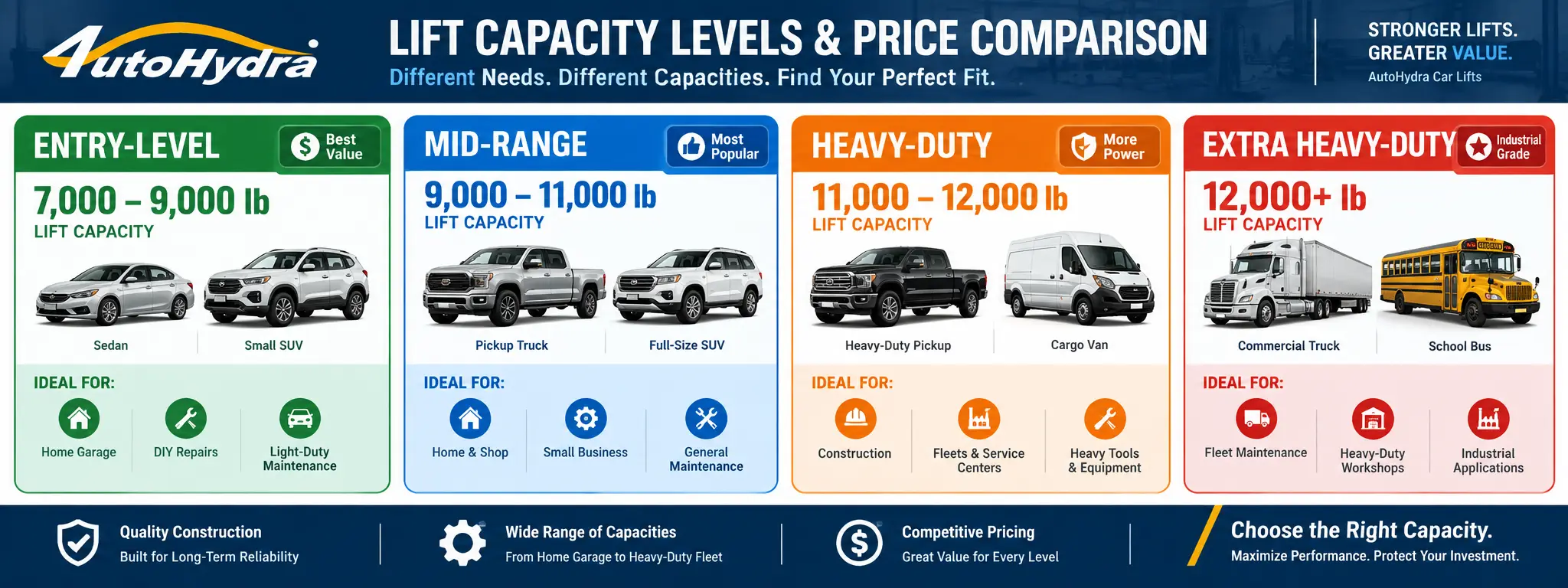
⚠️ These are capacity categories rather than fixed industry price ranges. Actual prices vary by manufacturer, configuration, specifications, shipping, and included equipment.
2. What Determines the Price of a 2 Post Car Lift?
Several factors can significantly affect the cost of a 2 post lift.
① Lifting Capacity
Capacity is one of the most obvious factors. A 7,000- or 9,000-lb lift may be appropriate for many cars, crossovers, SUVs, and light-duty vehicles. If you regularly work on full-size pickups, larger SUVs, or heavier vehicles, you may need an 11,000- or 12,000-lb class lift.
⚠️ However, buying the highest-capacity model available is not always the best financial decision. Select capacity based on the vehicles you actually plan to lift and service.
② Lift Design and Configuration
Two 2 post lifts can have similar lifting capacities but different designs. Buyers may encounter configurations such as:
● Overhead 2 post lifts
● Floor-plate 2 post lifts
● Different arm configurations
● Different lifting heights
● Different column widths
● Different adapter and pad systems
These differences can affect both the purchase price and how well the lift fits your garage.
③ 110V vs 220V Electrical Configuration
Some home garage users prefer a 110V configuration because it may fit more easily into an existing residential electrical setup. Other lifts use 220V power configurations.
Before purchasing, check:
● Required voltage
● Circuit requirements
● Motor specifications
● Plug or hardwire requirements
● Available electrical capacity
● Local electrical requirements
💡 Do not assume that a 110V or 220V label alone determines the overall performance of a lift. Always compare the complete specifications of the specific model.
3. How Much Does It Cost to Install a 2 Post Car Lift?
The equipment price is only one part of the total cost. Installation can add another layer of expense depending on your garage and the lift model.
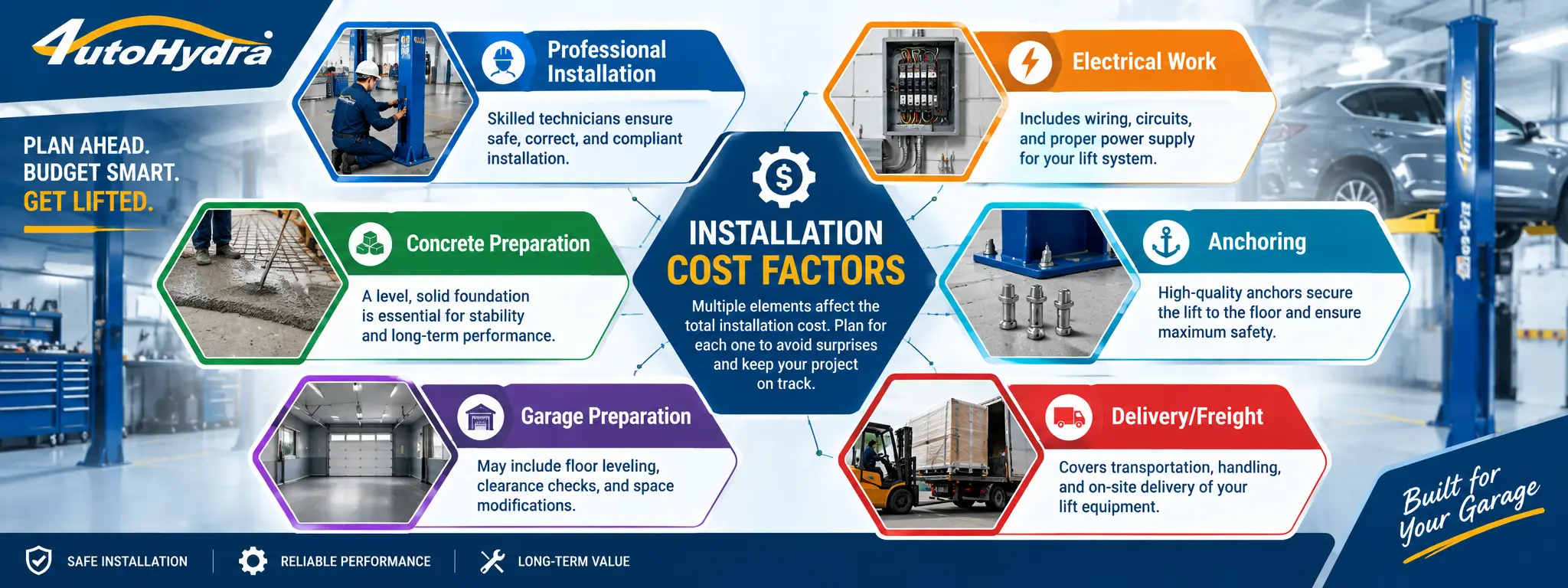
📖 Installation guide: How to Install a Car Lift: Step-by-Step Guide
4. Does a 2 Post Lift Need a Special Concrete Floor?
A 2 post lift places significant loads on its columns and anchors, so the concrete floor must meet the manufacturer's requirements.
Important factors can include:
● Concrete thickness
● Concrete strength
● Floor condition
● Cracks or damage
● Levelness
● Anchor requirements
● Location of the columns
⛔ Never assume that an existing residential garage floor is automatically suitable for a vehicle lift. If the floor does not meet the manufacturer's specifications, installation may require additional work before the lift can be installed.
5. What About Ceiling Height?
Garage height can affect your total purchasing decision just as much as price. A lift may fit your budget but still be unsuitable for your garage if the ceiling is too low.
Before buying a 2 post lift, measure:
● Garage ceiling height
● Vehicle height
● Maximum lifting height
● Overall lift height
● Garage door tracks / opener
● Lighting fixtures / HVAC equipment
● Other overhead obstructions
⚠️ Remember that the usable ceiling height is determined by the lowest obstruction, not simply the highest point of the ceiling.
📖 Measurement checklist: How Much Garage Space Do You Need for a Car Lift?
6. What Accessories Add to the Cost of a 2 Post Lift?
The lift itself may not be the only equipment you need. Depending on your vehicle and application, you may want additional accessories.
Common examples include:
● Height adapters
● Rubber lifting pads
● Truck adapters
● Extension adapters
● Jack trays
● Replacement pads
● Other vehicle-specific accessories
💡 The goal should be to buy the accessories that improve compatibility and usability rather than simply adding equipment to your order.
7. 2 Post Car Lift Cost: 9,000 vs 11,000 vs 12,000 lbs
If you're comparing 2 post lift prices, capacity is one of the easiest ways to organize your options.
9,000 lb 2 Post Lift
A popular capacity class for home garages and many passenger vehicles, SUVs, and light trucks. Best for: Passenger cars · Crossovers · Many SUVs · Light-duty pickups · DIY garages · Small workshops.
11,000 lb 2 Post Lift
More lifting capacity for larger vehicles. Best for: Full-size SUVs · Larger pickups · Heavier trucks · Mixed vehicle fleets.
12,000 lb 2 Post Lift
Intended for applications where higher lifting capacity is important. Best for: Heavy-duty home garages · Professional workshops · Truck-focused shops · Users who regularly service heavier vehicles.
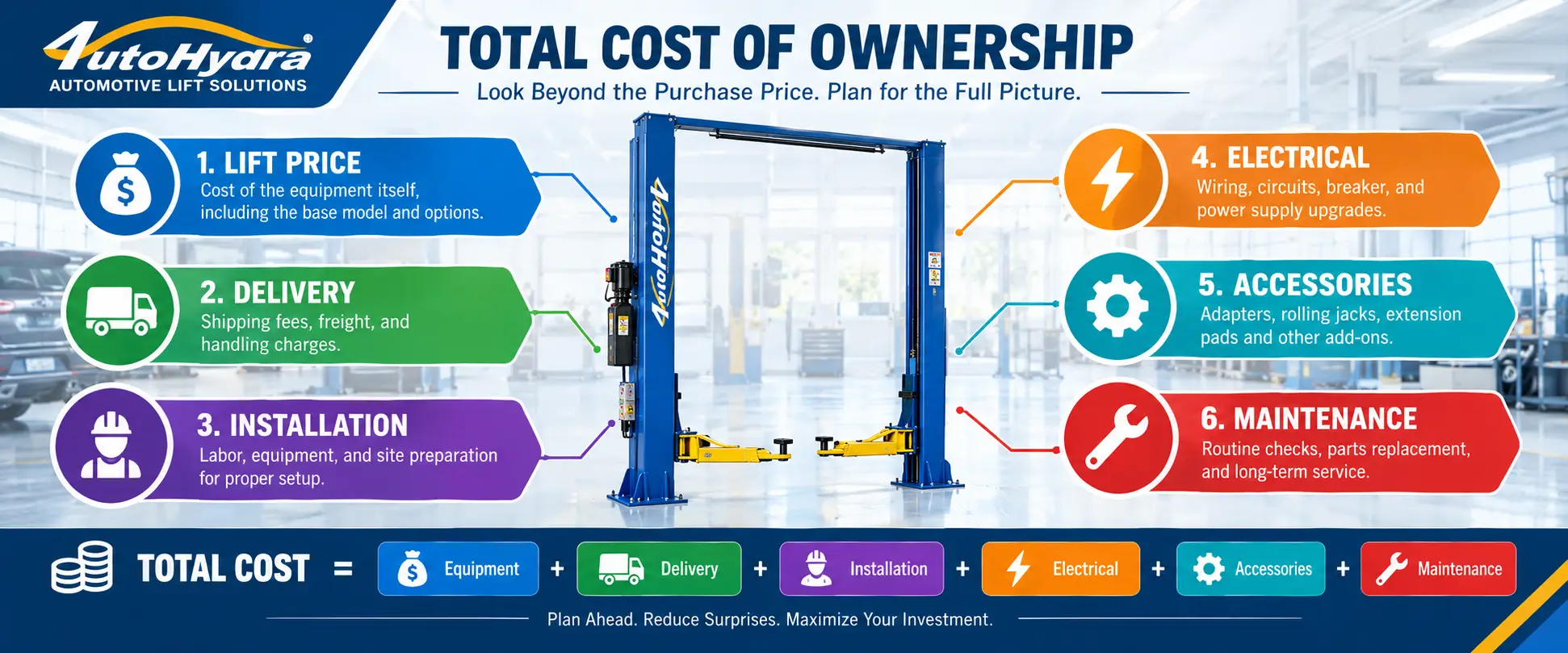
8. What Is the Total Cost of Owning a 2 Post Lift?
When comparing two lifts, don't look only at the equipment price. A more complete calculation includes:
🏷️Lift Price: Advertised equipment price
🚚 Delivery: Freight or delivery cost
🔧 Installation: Professional installation labor
⚡Electrical: Circuit and wiring work
🔩 Accessories: Vehicle-specific adapters
🛠️ Maintenance: Regular inspection and service
📖 Maintenance guide: Car Lift Maintenance Checklist & Safety Guide
9. Is a Cheap 2 Post Car Lift Really Cheaper?
Not always. A low purchase price can be attractive, but you should compare the complete package.
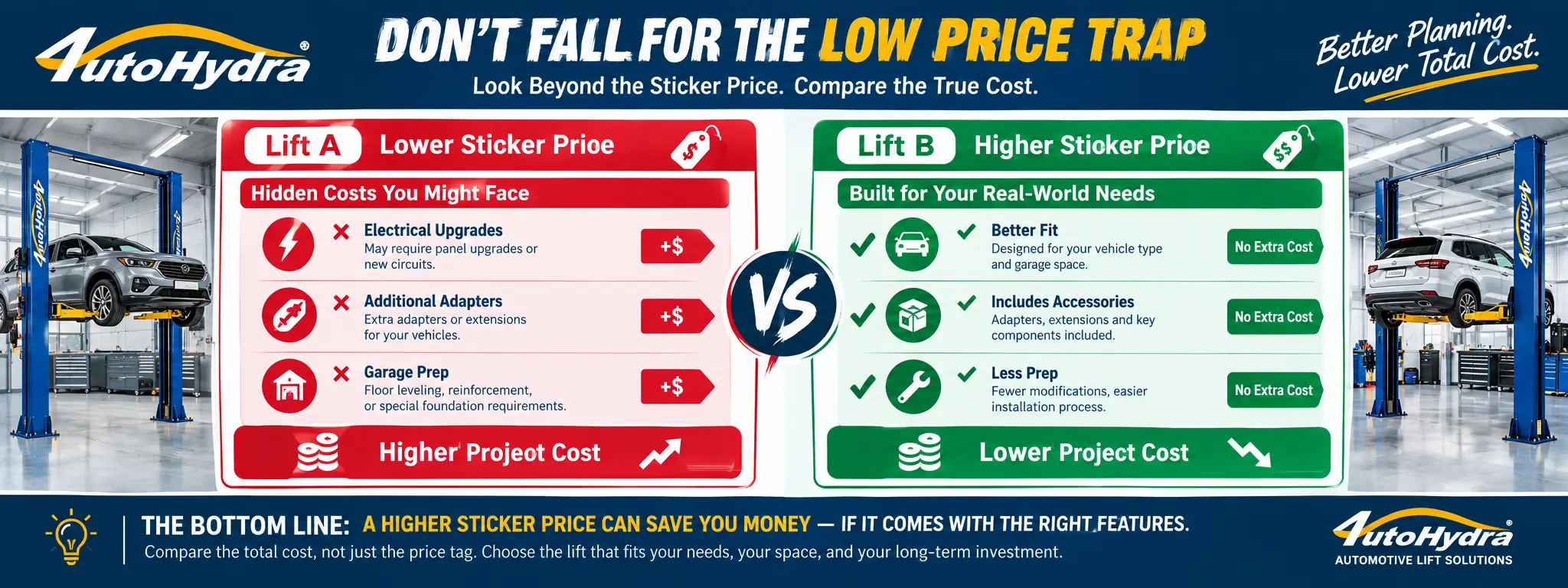
10. How to Save Money When Buying a 2 Post Car Lift
You do not necessarily need to buy the cheapest lift to reduce your total cost. Instead, focus on avoiding unnecessary expenses.
✅ 1. Choose the Right Capacity — Don't automatically pay more for capacity you don't need.
✅ 2. Measure Your Garage First — A lift that doesn't fit your garage can become an expensive mistake.
✅ 3. Check Electrical Requirements — Know whether your selected model requires 110V, 220V, or another configuration.
✅ 4. Check Concrete Requirements — Make sure your garage floor meets the manufacturer's requirements before delivery.
✅ 5. Buy Only Necessary Accessories — Select adapters and accessories according to your vehicles.
✅ 6. Compare Total Cost — Consider: Equipment + Delivery + Installation + Electrical + Accessories.
Frequently Asked Questions
How much does a 2 post car lift cost?
The cost varies depending on lifting capacity, design, electrical configuration, manufacturer, delivery, installation, and accessories. Home-garage models generally cost less than higher-capacity heavy-duty systems, but buyers should compare the complete project cost rather than only the lift price.
How much does it cost to install a 2 post car lift?
Installation costs vary depending on the lift, garage, concrete floor, electrical system, and whether professional installation is required. Some installations may require electrical or concrete preparation in addition to the lift installation itself.
Is a 9,000-lb 2 post lift enough for a home garage?
A 9,000-lb lift can be suitable for many home garages, passenger cars, SUVs, and light-duty vehicles. Always compare the vehicle's actual weight requirements with the specific lift manufacturer's specifications.
Is a 12,000-lb lift worth the extra money?
It depends on your vehicles and application. If you regularly service heavier SUVs, pickups, or trucks, the additional capacity may be useful. If you mainly service smaller vehicles, paying for substantially more capacity may not provide much practical benefit.
Is a 2 post lift good for a home garage?
Yes, if the garage meets the lift's installation requirements. A 2 post lift is particularly useful for homeowners who want to perform mechanical repairs and need good access to the vehicle's underbody.
Does a 2 post lift need 220V?
Not every model uses the same electrical configuration. Some models are available in 110V configurations, while others use 220V. Always check the specifications of the specific lift before purchase — and consult an electrician if you're unsure about your garage's electrical capacity.
Does a 2 post lift require professional installation?
Installation requirements vary by model. Because vehicle lifts involve substantial loads and anchoring requirements, buyers should follow the manufacturer's installation instructions and use qualified installation help when appropriate. Improper installation is a leading cause of lift failure and safety incidents.
What is more important: price or capacity?
Capacity should come first, provided the lift also fits your garage and intended application. Buying an inexpensive lift that does not meet your vehicle requirements is not a good value — it's a safety risk and a wasted investment.
Need Help Budgeting for Your 2 Post Lift?
Get a free cost assessment from AUTO HYDRA's lift experts — we'll help you estimate the total project cost including installation, electrical, and accessories.
✔️ Free consultation · ✔️ Transparent pricing · ✔️ Fast shipping from US warehouses
Recommended News
View all